
Concussion Treatment
Concussions can occur due to a range of factors, including sports injuries, falls, motor vehicle accidents, or other traumatic events. At Pursuit Physiotherapy, our team of professionals specializes in concussion management, offering comprehensive care and support to help you recover safely and effectively.
Whether you’ve recently experienced a concussion or are dealing with lingering symptoms, our physiotherapists, chiropractors, and massage therapists provide personalized treatment plans tailored to your specific needs and help you on your journey toward concussion recovery.
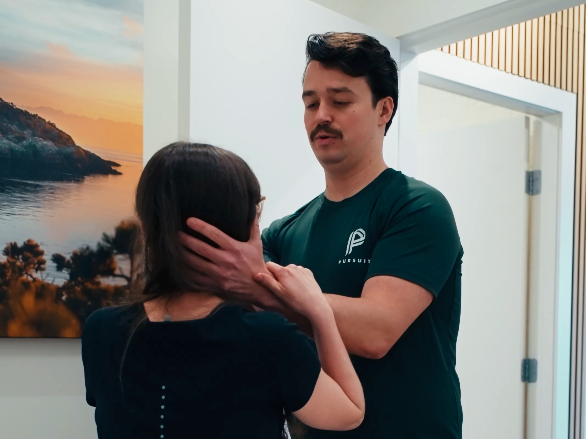
What Are Concussions?
A concussion is a mild brain injury that cannot be seen on routine imaging. It affects how the brain functions and may impact thinking, memory, balance, and overall well-being.
Although concussions are classified as “mild” brain injuries, their symptoms can be complex and should be taken seriously. Proper assessment and guided care are essential for safe recovery.
Common Concussion Symptoms
If you have recently experienced an impact to your head or body, look out for the following symptoms:
- Headache or pressure in the head
- Nausea or vomiting
- Dizziness or loss of balance
- Sensitivity to light or noise
- Brain fog, confusion, or difficulty concentrating
- Fatigue or drowsiness
- Tinnitus or ringing in the ears
- Blurred vision
- Nausea or vomiting
Delayed Concussion Symptoms
In many cases, it is easy to identify a concussion when symptoms appear shortly after a traumatic injury. However, some concussion symptoms can be delayed or subtle.
Every concussion is different, and symptoms may not be immediately apparent. For example, memory difficulties or cognitive changes may develop gradually. In some cases, concussion-related brain changes take time to impact a person’s day-to-day life, making early assessment especially important.
Causes of Concussions
Concussions can occur for a variety of reasons, including:
- Sports injuries
- Falls
- Motor vehicle accidents
- Workplace injuries
- Other traumatic events
A severe impact to the head or body can cause the brain to move rapidly within the skull. These sudden acceleration and deceleration forces cause the brain to bounce or twist, leading to stretching and damage of brain cells and tissues. This disruption in normal brain function results in a concussion.
Concussion Treatment
Physiotherapy plays a central role in concussion recovery and may include:
- Comprehensive concussion assessment
- Vestibular and balance rehabilitation
- Visual and eye-tracking exercises
- Neck mobility and strengthening
- Graduated return-to-activity programs
- Education on symptom management and pacing
Chiropractic care addresses the musculoskeletal and neurological components of concussion, including:
-
- Cervical spine assessment
- Gentle joint mobilization or manipulation (when appropriate)
- Improving neck function and posture
- Reducing headache and neck-related symptoms
- Cervical spine assessment
Massage therapy supports recovery by addressing soft tissue dysfunction:
- Reducing muscle tension in the neck and shoulders
- Improving circulation
- Helping manage headache-related muscle tightness
- Promoting relaxation and stress reduction
- All treatments are individualized and coordinated based on your symptoms and stage of recovery.
When Should You Seek Treatment?
All treatments are individualized and coordinated based on your symptoms and stage of recovery. You should consider seeking professional care if you experience:
- Headache that worsens or does not improve over time
- Repeated vomiting or persistent nausea
- Dizziness, balance problems, or difficulty walking
- Sensitivity to light or noise that interferes with daily activities
- Confusion, memory problems, or difficulty concentrating
- Changes in mood, behavior, or personality
- Excessive drowsiness or trouble waking up
- Loss of consciousness, even briefly
- Symptoms following a fall, accident, or sports injury
- Symptoms that worsen or return after initial improvement
If you want, I can also adapt this for a website, patient handout, or social media tone.
Frequently asked questions
What should I do immediately after a concussion?
Rest for the first 24–48 hours and avoid activities that worsen symptoms. Gradual, guided activity can then begin based on tolerance.
Can a concussion heal on its own?
Some concussions resolve with rest, but many benefit from guided rehabilitation—especially when symptoms persist.
Do I need imaging like an MRI or CT scan?
Most concussions do not show up on imaging. Scans are typically only required if red-flag symptoms are present.
Do I need a referral?
No referral is required to receive concussion care from our physiotherapists, chiropractors, or massage therapists.