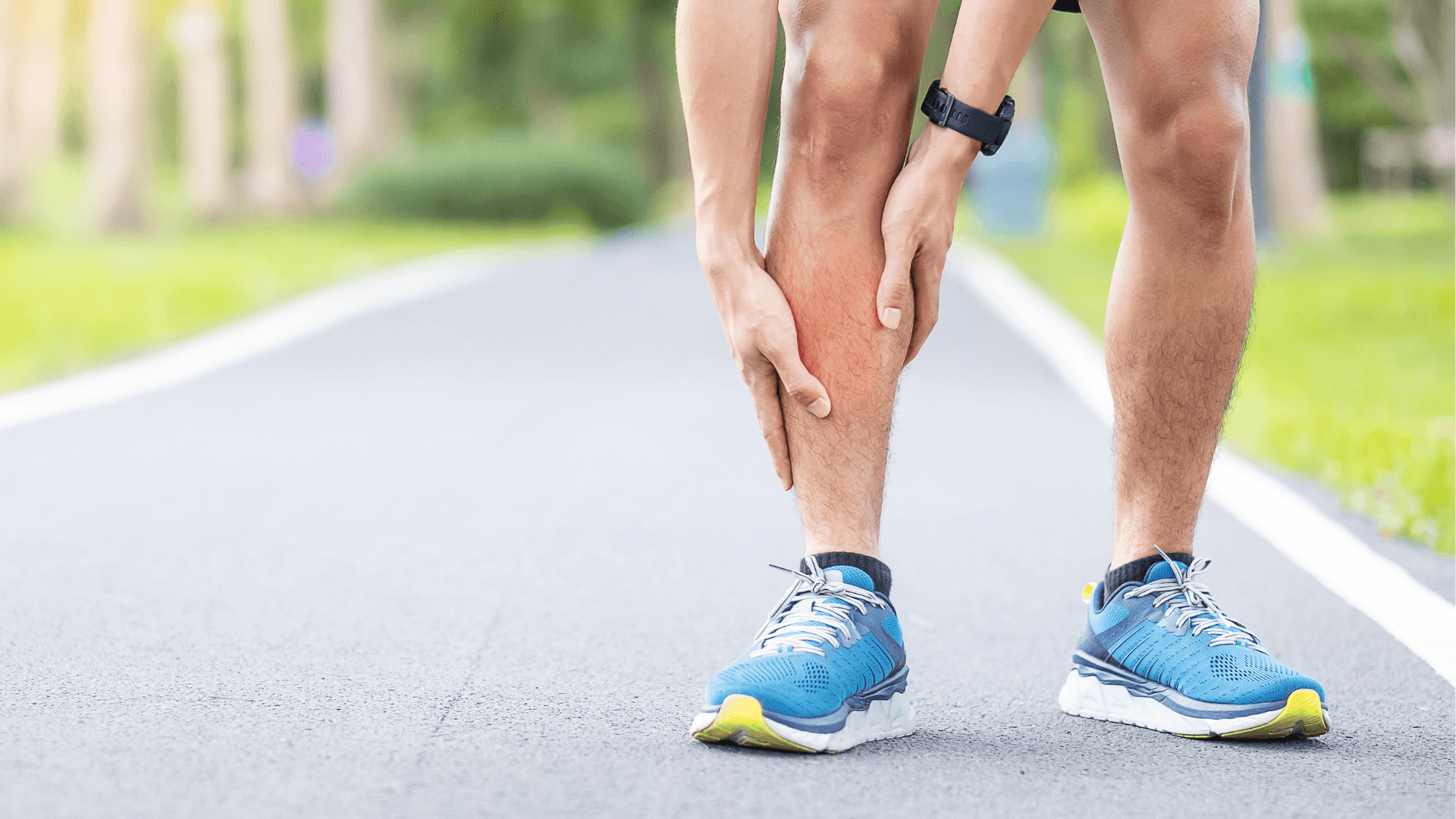
That deep ache along the inside of your shin — the one that flares up on the Galloping Goose and lingers on the stairs afterwards — is one of the most common running injuries we see in Victoria, BC. Here’s what’s actually happening, and what’s the best shin splints treatment before your next marathon.
The Ache That Shows Up Right When Training Gets Serious
It’s July in Victoria. The mornings are bright, Dallas Road is packed with runners, and if you’re targeting the Royal Victoria Marathon or half marathon this October, your training plan just moved from “easy base miles” to “things are getting real.”
And that’s exactly when shin splints tend to show up.
It usually starts subtly — a dull ache along the inner edge of your shin bone during the first kilometre that seems to warm up and disappear. Then it starts lingering after runs. Then it’s there on the stairs at work. If you keep pushing through without changing anything, what began as a manageable niggle can force you to stop running altogether — sometimes just weeks before the race you spent months preparing for.
The clinical name for this condition is medial tibial stress syndrome (MTSS). At Pursuit Physiotherapy on Hillside Ave, it’s one of the most common complaints we see every summer as Victoria’s race-training season ramps up. The good news: it responds well to the right plan. The key phrase is the right plan — because most of what runners instinctively do about shin splints doesn’t address why they happened.
Research Stat: Medial tibial stress syndrome is one of the most common running-related injuries, with reported incidence in runners ranging from 13.6% to 20%, and rising as high as 35% in military recruits.
Source: Menéndez et al., International Journal of Environmental Research and Public Health, 2020. DOI: 10.3390/ijerph17207457.
What Are Shin Splints, Exactly?
“Shin splints” is the umbrella term almost everyone uses, but medial tibial stress syndrome describes something specific: an overload reaction of the tibia (shin bone) and the tissues that attach to its inner border.
Every time your foot hits the ground running, your tibia bends slightly and absorbs load. That’s normal — bone is living tissue, and it adapts to stress by getting stronger. But adaptation takes time. When the loading (kilometres, intensity, hills, speed work) increases faster than the bone and surrounding tissues can adapt, the result is an irritated, overloaded section of bone along the inside of your shin.
That’s why MTSS is best understood as a training load problem expressed in your shin — not simply a shin problem.
Typical features include:
- Diffuse pain along the inner border of the shin, usually the lower two-thirds
- Pain at the start of a run that may ease as you warm up (early stages)
- Pain that lasts longer after runs as the condition progresses
- Tenderness when you press along the inside edge of the tibia over several centimetres
A recent scoping review of 37 studies confirmed that MTSS overwhelmingly affects athletic populations — runners chief among them — and that risk is driven by a combination of training exposure and individual biomechanics.
Source: Medial Tibial Stress Syndrome: A Scoping Review of Epidemiology, Biomechanics, and Risk Factors, Cureus, 2025. PMID: 40171337.
Shin Splints or Something More? The Stress Fracture Question
This distinction matters. MTSS pain is typically diffuse — spread over a length of the inner shin. A tibial bone stress injury (stress fracture) tends to produce focal pain — one specific spot you can point to with a fingertip — that gets worse with continued running and may ache at rest or at night.
If your shin pain is pinpoint, worsening, or present at rest, don’t try to train through it. Get assessed. Part of a physiotherapy assessment for shin pain is screening for exactly this, and referring for imaging when the picture warrants it.
Why Did This Happen? The Risk Factors That Actually Matter
There’s rarely one single cause. The research points to a cluster of contributors:
Training load spikes. The most common story we hear: a sudden jump in weekly mileage, a shift into hill or speed sessions, or compressing a training plan after missing weeks. Sound familiar in a marathon build?
Foot mechanics. Greater navicular drop (how much your arch flattens under load) and foot pronation are among the most consistently identified intrinsic risk factors in runners.
Hip and pelvis control. Higher frontal-plane pelvic tilt and increased hip internal rotation during running have both been associated with MTSS — a reminder that what happens at your hips changes what your shins absorb.
Source: Menéndez et al., International Journal of Environmental Research and Public Health, 2020. DOI: 10.3390/ijerph17207457.
Previous MTSS. A history of shin splints is a strong predictor of recurrence — usually because the original contributing factors were never addressed. The pain resolved with rest; the reasons for the pain didn’t.
Footwear and surfaces. Worn-out shoes and abrupt changes in running surface can contribute, though these tend to matter less than load management and mechanics.
Notice what’s not on this list: “weak shins.” MTSS is rarely about one weak structure. It’s about the total load exceeding the current capacity of the system — which is why treatment has to address both sides of that equation.
Why Rest Alone Usually Fails for Shin Splints Treatment
Passive shin splints treatments are things done to you: machines, modalities, prolonged rest. Some manual, hands-on care absolutely has a role in recovery — but as a support to active rehab, not a substitute for it.
You won’t find ultrasound, TENS, IFC, or laser machines at Pursuit. That’s a deliberate, evidence-based decision, not a gap in our services. The research on MTSS is consistent: recovery is built through progressive loading, strength, and training modification — not through modalities applied to the surface of your shin.
Pursuit Philosophy: Your shin didn’t get overloaded because it lacked ultrasound. It got overloaded because demand outpaced capacity. Our job is to rebuild capacity — measurably — while keeping you moving toward your race.
Active treatment for MTSS at Pursuit typically includes:
- Load management, not shutdown. We modify volume, intensity, and surfaces to keep you training at a level your shins can currently tolerate — often maintaining fitness through cycling, pool running, or adjusted run-walk programming rather than full rest.
- Progressive lower-leg loading. Graded calf and soleus strengthening to build the capacity of the muscle-tendon-bone system that absorbs impact.
- Neuromuscular and hip control work. Directly targeting the pelvis and hip mechanics identified in the risk-factor research — and the intervention category with the strongest preventive evidence.
- Running assessment and retraining. Cadence, step width, and loading patterns can meaningfully change tibial stress. This is where our video running assessment earns its keep.
- A return-to-run plan with objective criteria. Not “try it and see” — progression gated by symptom response and retested strength metrics.
How Physio and RMT Work Together on Shin Splints Treatment
At Pursuit, physiotherapy and registered massage therapy operate from a shared model — and MTSS is a good example of why that matters.
Your physiotherapist leads the diagnostic and rehab process: ruling out bone stress injury, identifying your specific contributing factors, building the loading program, and managing your return-to-run progression toward race day.
Your RMT works on the tissue environment around the recovery: reducing protective tone in overworked calves and deep flexors, improving local circulation, and helping your lower legs tolerate the rebuild. Think of the RMT as preparing the ground so the strength work can take root — creating a window where movement feels better and training quality improves.
The Integration Principle: Massage doesn’t heal a bone stress reaction — and loading programs go better when the muscles around the tibia aren’t guarded and irritable. Each discipline does what it does best, in sequence, on one shared plan.
Multimodal, combined approaches to running injuries are consistent with the broader evidence favouring exercise-centred care supported by manual therapy — rather than either one alone.
Source: Winters et al., Sports Medicine, 2013. DOI: 10.1007/s40279-013-0087-0.
The Pursuit Approach: Getting You to the Start Line
Here’s what working through shin splints at Pursuit actually looks like — built on the Pursuit Process:
Define your goal. “Run the Royal Victoria half without shin pain” is a different plan than “get back to pain-free lunchtime 5Ks.” We start with the finish line in mind — literally.
Measure what matters. Baseline testing: calf strength and endurance (yes, we count reps and load — single-leg calf raise capacity is measurable), hop tolerance, ankle mobility, and video running analysis in our on-site gym.
Personalized pain relief. Hands-on care, activity modification, and early-stage loading that settles symptoms without dismantling your fitness.
Tailored programming. Your strength and return-to-run program reflects your testing results, your training history, and your race date — not a generic shin splints handout.
Retest metrics. Every few weeks we re-measure. Strength numbers climbing, run tolerance expanding, symptoms trending down — or we adjust the plan.
Fitness for life. The endpoint isn’t just a pain-free race. It’s a stronger, more load-tolerant runner who knows how to build training volume without breaking down — this season and every one after it.
One-on-one appointments mean your physio is with you for the full session. No assembly line, no handing you off to a machine in the corner.
What to Expect: Honest Timelines
Recovery from MTSS is real but rarely instant, and it’s not always linear. Mild, recent-onset cases often improve within a few weeks of load modification and progressive strengthening. Longer-standing cases — especially where training has continued through worsening pain — typically take longer, and progress can come in waves.
We won’t promise you a specific number of sessions or guarantee a pain-free race day; anyone who does is guessing. What we do guarantee:
- A thorough assessment that takes your shin pain seriously, including screening for bone stress injury
- Honest communication about where you stand relative to your race timeline
- An evidence-based plan built around your goal, adjusted as your numbers change
- A collaborative team that wants you at that start line as much as you do
Book Your Shin Pain Treatment at Pursuit
If your shins are talking to you during marathon training — or any running at all — don’t wait until they’re shouting.
Pursuit Physiotherapy
📍 102B–740 Hillside Ave, Victoria, BC
🚗 Free 60-minute parking on site, and easily accessible by transit
📅 Book online: pursuitphysiotherapy.janeapp.com
📞 (250) 363-9707
✉️ info@pursuitphysiotherapy.ca
No referral needed — direct billing available to all major extended health insurers
References
- Menéndez C, Batalla L, Prieto A, Rodríguez MÁ, Crespo I, Olmedillas H. Medial Tibial Stress Syndrome in Novice and Recreational Runners: A Systematic Review. International Journal of Environmental Research and Public Health. 2020;17(20):7457. DOI: 10.3390/ijerph17207457.
- Medial Tibial Stress Syndrome: A Scoping Review of Epidemiology, Biomechanics, and Risk Factors. Cureus. 2025. PMID: 40171337.
- Preventive interventions for medial tibial stress syndrome: Systematic review and meta-analysis. Gait & Posture. 2025. PMID: 40633262.
- Winters M, Eskes M, Weir A, Moen MH, Backx FJG, Bakker EWP. Treatment of Medial Tibial Stress Syndrome: A Systematic Review. Sports Medicine. 2013;43(12):1315-1333. DOI: 10.1007/s40279-013-0087-0.