Rib or chest pain after a car accident in Victoria is common, and the diagonal shoulder belt is usually why it hurts where it hurts. Some chest symptoms are urgent and must not go to physiotherapy first. Read the red-flag section below first.
The Belt Did Its Job. That Is Why Your Chest Hurts.
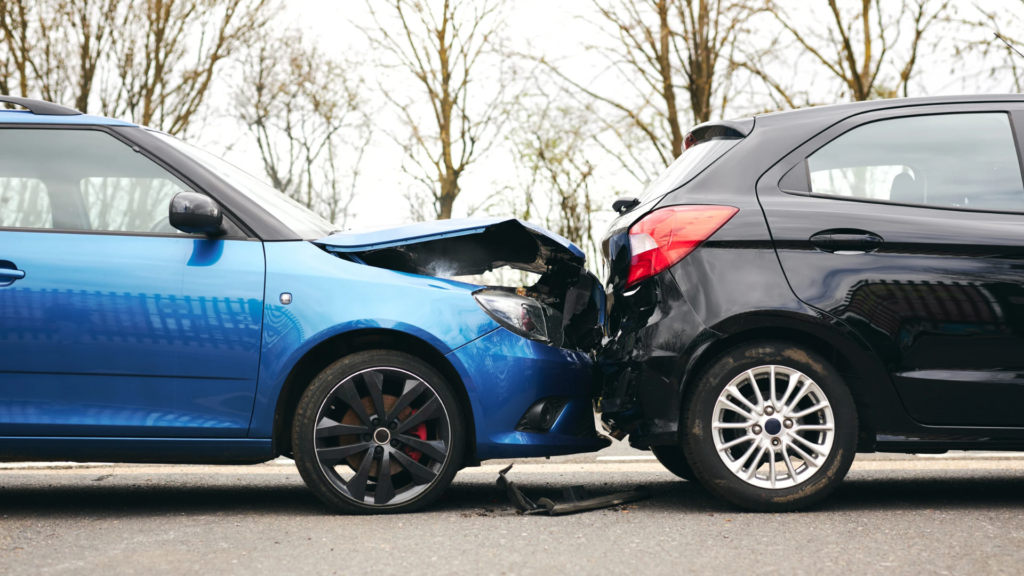
It is a dark, wet October evening in Victoria. Traffic is stacked on the Pat Bay Highway, the McKenzie interchange is crawling, and somewhere between there and Douglas Street somebody does not stop in time. The damage to your car looks almost embarrassing. You walked away.
Then, a day or two later, something sharp settles in around your ribs. It bites when you breathe deeply, and worse when you twist, cough, laugh, or roll over in bed at 3am. You have been to emergency or a walk-in off Hillside and been told nothing is broken. You are still not reassured, because chest pain is frightening in a way a sore ankle is not.
Your rib or chest pain after a car accident is not a mystery. A three-point belt routes collision energy through the strongest structures available, and for the upper body that means the diagonal shoulder belt pressing a narrow band of load across your ribs, costal cartilage and sternum. The belt kept your chest off the steering column. The soreness along that diagonal is the receipt — and it tells us which tissues to aim rehabilitation at. But first, triage.
ICBC Fast Fact: Under ICBC’s Enhanced Care model you are pre-approved for 25 physiotherapy sessions and 25 chiropractic sessions in the first 12 weeks after a crash. No referral from a physician or nurse practitioner, and no separate approval from ICBC. All you need is your claim number and your Personal Health Number. Pursuit Physiotherapy direct-bills ICBC, so there is no cost to you at the point of care.
First, the Part That Matters Most: When Rib or Chest Pain Is an Emergency
This sits near the top on purpose. Physiotherapy is the right answer for most rib or chest pain after a car accident and the wrong answer, dangerously so, for a small proportion.
Go to an emergency department, or call 911, if you have any of the following:
– Shortness of breath or difficulty breathing that is new or getting worse
– Coughing up blood
– Chest pain that is worsening rather than settling, or that feels crushing, heavy or squeezing rather than sharp and localised
– Pain radiating into your jaw, neck, shoulder or down an arm
– Dizziness, light-headedness, fainting, or a racing or irregular heartbeat
– Fever, chills, or a productive cough developing in the days after the crash
– Visible deformity, a grinding or shifting sensation in the chest wall, or an area that looks swollen, hot or red
– Pain after a high-speed collision, a rollover, or any crash in which the airbags deployed
– Abdominal pain, blood in your urine, or bruising across the abdomen in the pattern of the lap belt
None of those are physiotherapy problems. The order of operations is medicine first, rehabilitation second.
Why be this emphatic? Because the clinical examination for musculoskeletal chest pain is not specific enough to stand alone. Pain reproduced by pressing on the chest wall shifts the odds, an adjusted odds ratio of 6.5 (95% CI, 4.6 to 9.1) for chest wall syndrome, but it is not pathognomonic. In one emergency department study, 12% of patients who presented with chest pain and had chest wall tenderness also had an acute myocardial infarction.
*Source: Mott et al., American Family Physician, 2021. PubMed ID: 34264599
So “it hurts when you press it” is not a clean ruling-out. If you have not been assessed medically, get assessed. And if your presentation changes during rehabilitation, get reassessed.
Why you get rib or chest pain after a car accident
Your rib or chest pain after a car accident can arise from the bony or cartilaginous structures, the joints, or the myofascial structures of the trunk — and are consistently described in the literature as under recognized by clinicians.
After a belt-loaded collision, the plausible contributors include:
Costochondral and costosternal joint strain
Where each rib meets its cartilage, and the cartilage meets the breastbone. Directly under the belt’s diagonal path.
Costovertebral and costotransverse joint strain
The joints at the back where each rib meets the spine. Often a deep point beside the spine or under the shoulder blade, worst on a deep inhale or a twist.
Intercostal muscle strain
The small muscles between the ribs. They work every breath, so they get no rest day.
Bone bruising of the ribs or sternum
Painful, slow, and invisible on plain films.
Rib or sternal fracture
Less common in low-speed collisions, but it happens, and it is what your emergency assessment was looking for. For scale, rib fractures are the most common presenting injury in blunt chest trauma, occurring in nearly two-thirds of patients who present with it.
Source: Hemati et al., Current Anesthesiology Reports, 2024. DOI: 10.1007/s40140-024-00645-w
“Costochondritis” Is a Description, Not an Explanation
You may have left your appointment with the word costochondritis written on a piece of paper. It means pain at the costochondral or costosternal junctions, diagnosed clinically by reproducing your pain on palpation of the parasternal region — there are no laboratory, imaging or ECG findings specific to it. It typically presents as parasternal pain worsened by deep breaths, coughing and stretching, usually at the upper junctions (predominantly the second through fifth), without heat, redness or visible swelling.
Source: Mott et al., American Family Physician, 2021. PubMed ID: 34264599
So costochondritis is a legitimate label for where your pain comes from, but it is not a mechanism: it does not tell you why those joints became painful, what is guarding around them, or what to do about it. That gap is where physiotherapy lives.
Research Stat: Chest pain accounts for approximately 1% to 3% of all ambulatory primary care visits. Of those, chest wall pain accounts for 20% to 50%, and costochondritis for 6% to 13%.
Source: Mott et al., American Family Physician, 2021. PubMed ID: 34264599
The Breathing Problem Nobody Warns You About
When breathing hurts, you stop breathing properly. Not consciously — your nervous system finds the strategy that hurts least, and that strategy is small, fast, shallow breaths with a braced ribcage. It works in the short term. The problem is what it costs.
The pathway is well described in the chest-trauma literature. Thoracic pain limits chest wall excursion, which reduces tidal volumes and produces an ineffective cough. That means inadequate secretion clearance, contributing to atelectasis — segments of lung that are not inflating. Pain also reduces your ability to move, compounding the problem. That is why the primary goals in managing significant chest-wall injury are optimising oxygenation and ventilation, pulmonary hygiene, early mobility and effective analgesia, and why a randomised trial of incentive spirometry in patients with traumatic rib fractures found reduced pulmonary complications.
Source: Hemati et al., Current Anesthesiology Reports, 2024. DOI: 10.1007/s40140-024-00645-w
That literature is drawn from hospitalised trauma patients, so your risk profile is far lower — but the mechanism runs on the same rails at every severity. Three weeks post-crash we routinely see a thoracic spine that has stopped rotating and a neck doing work the ribcage used to do.
What Physiotherapy Actually Does for a Painful Chest Wall
Rehabilitating a chest wall is a sequence, and each part has a job.
Breathing mechanics
Re-establishing full diaphragmatic excursion and lower rib expansion, first in non-provocative positions, then in sitting, standing and movement. Little else progresses until breathing does.
Rib and thoracic mobility
Graded mobilisation of the costovertebral, costotransverse and thoracic segments, with active rotation and extension, so your neck, shoulders and low back stop compensating.
Intercostal and thoracic soft-tissue work
Manual therapy and dry needling where clinically indicated, to reduce the protective tone holding the ribcage still.
Graded loading and return to sport
Progressive pushing, pulling, carrying, overhead work and trunk rotation — paced by time and tolerance rather than pain — through to staged progressions back to deadlifting, rowing on the Gorge, or picking up a toddler without flinching. This is where a chest wall stops being fragile.
On the evidence we will be straight with you, because the research base here is thinner than it is for whiplash.
A 2025 systematic review of seven randomised trials involving 393 patients examined thoracic manual therapy, with or without exercise, reporting better outcomes across every outcome evaluated — pain, disability, range of motion, quality of life and satisfaction — though heterogeneity and variable follow-up limited generalisability. Its conclusion is the one we build around: thoracic care should be an adjunct to rehabilitation, not a stand-alone treatment.
Source: Robles-Pérez et al., Healthcare, 2025. DOI: 10.3390/healthcare13192479
A separate meta-analysis of breathing exercises and thoracic manual techniques pooled 31 studies for pain and 24 for disability, finding a small effect for pain (dppc = −0.35, 95% CI = −0.46 to −0.23) and a large effect for disability (dppc = −0.71, 95% CI = −0.86 to −0.57) versus controls — with substantial heterogeneity (I² > 85%) and low overall certainty. Note the population: low back pain, not chest-wall trauma.
Source: Seyedhoseinpoor et al., PLOS ONE, 2026. DOI: 10.1371/journal.pone.0339263
How Long Does This Take? Honest Timelines
Timelines vary more than anyone wants them to, and the honest answer depends on which tissue is driving your pain.
A bruised, strained chest wall, joint strain with intercostal involvement, no fracture, typically improves over weeks rather than months: a sharp early phase easing in the first two to three weeks, then a longer tail of twinges on end-range rotation, deep inhalation or heavy loading. Research specific to this presentation after a collision is limited, and we will not invent numbers.
Costochondritis has slightly better data. In one large observational study, 91% of patients with new-onset costochondritis had resolution of pain after three weeks of treatment with rest and non-steroidal anti-inflammatory drugs, with a recurrence rate of approximately 4% after two years. It is equally honest to state that no high-quality studies have examined the effectiveness of any treatment options for costochondritis, and that the only physiotherapy-specific finding in that review is a stretching program producing a small reduction in pain in patients symptomatic for over a year.
Source: Mott et al., American Family Physician, 2021. PubMed ID: 34264599
A healed rib fracture is a longer arc, and the chest wall can stay sensitive well after the bone is structurally sound. For scale — with the caveat that this comes from hospitalised trauma populations — rib fractures are associated with long-term pain and disability, with only approximately 59% of patients returning to work at six months after injury.
Source: Hemati et al., Current Anesthesiology Reports, 2024. DOI: 10.1007/s40140-024-00645-w
The counterweight: many chest-wall injuries rehabilitate well, with patients returning to their prior activity level, while a minority carry a risk of complications and need closer monitoring.
Active vs. Passive Therapy: Why There Is No Ultrasound Machine at Pursuit
Passive therapy is treatment done to you while you lie still: therapeutic ultrasound, interferential current (IFC), TENS, laser therapy, extended hands-on work with no exercise or education attached. Skilled manual therapy is genuinely valuable, and it is in every chest-wall plan we write. What it is not is a plan.
You will not find ultrasound, IFC, TENS or laser units at Pursuit Physiotherapy. That is a deliberate, evidence-informed decision, not a gap in our services. Those modalities can change how a chest wall feels for an hour. They do not restore rib and thoracic mobility, retrain breathing mechanics, rebuild your capacity to load your trunk, or give you anything to do between appointments — a poor use of a 12-week ICBC window.
This is not only our clinical opinion. ICBC‘s own patient guidance notes that active treatments tend to be more effective at restoring physical function rather than only treating pain, and advises that prioritising them is how you get the most out of your initial 12 weeks.
There is direct evidence here too. A 2025 systematic review and meta-analysis of 27 road-traffic-crash studies — 17 of them delivering physiotherapy — found pooled effects favouring the intervention group overall (SMD = −0.14, 95% CI: −0.29, 0.00), a reduction in time to return to work of 17.84 days (95% CI: −24.94, −10.74), and an increased likelihood of returning to full rather than partial duties (RR = 1.17, 95% CI: 1.01, 1.36). The authors are careful, and so are we: these rest on a small number of studies with low-quality evidence, and 94% of participants had whiplash rather than chest-wall injuries.
Source: Brakenridge et al., Journal of Occupational Rehabilitation, 2025. DOI: 10.1007/s10926-024-10185-z
Navigating Your ICBC Claim in Victoria
If you were injured in a crash in British Columbia, your treatment falls under ICBC’s Enhanced Care model. In the first 12 weeks, ICBC pre-approves 25 physiotherapy sessions, 25 chiropractic sessions, and additional treatment where clinically justified and authorised.
You do not need a referral from a family physician or nurse practitioner, separate approval from ICBC, or a call back from an adjuster. At Pursuit Physiotherapy in Victoria we handle ICBC direct billing, so there is no cost to you at point of care. We will not quote dollar figures — fee schedules change — so call us or check icbc.com.
What to bring to your first appointment:
- Your ICBC claim number (generated when you report the claim)
- Your Personal Health Number
- Any imaging reports, emergency department paperwork or walk-in notes from the crash (optional)
- A short list of what your chest pain is stopping you doing — it becomes the first line of your treatment plan
ICBC and Early Treatment: Starting early matters clinically and administratively. Clinically, the guarding-and-stiffening cascade described above is far easier to interrupt in week one than in week ten. Administratively, your 12-week pre-approval window starts on the date of the crash, not the date you get around to booking.
If your recovery runs past 12 weeks, that is not the end of your coverage; it is a conversation between your clinician and your ICBC recovery specialist, who ICBC recommends you update every two to three weeks. For the wider mechanics of a claim, see our guides on what to expect after a car accident, ICBC claims for physio and chiro and physiotherapy cost and coverage in Victoria BC. Rib or chest pain after a car accident also rarely travels alone: for a stiffened neck or new headaches read whiplash after a car accident, and we treat neck pain and back pain as distinct problems. For fogginess, light sensitivity or dizziness, see post-concussion syndrome.
Your rib or chest pain after a car accident Rehab
Realistic Expectations
Recovery from a chest-wall injury is rarely a straight line. You will likely have a good week followed by a day when a sneeze reminds you the ribs are still healing. That is normal, not a sign of failure or re-injury.
We will not promise a specific outcome or a specific number of sessions. What we guarantee is a thorough assessment, honest communication, a plan built on the best available evidence — including candour about where that evidence is thin, as it genuinely is here — and a collaborative team alongside you for as long as the job takes.
Your recovery is not predetermined. It is shaped by how early you get assessed, how well your breathing and rib mobility are restored, and how actively you rebuild capacity — all things you can still influence, starting today. Welcome to Rehab Reimagined.
Book an Assessment at Pursuit
Pursuit Physiotherapy
📍 102B–740 Hillside Ave, Victoria, BC
🚗 Free 60-minute parking on site, and easily accessible by transit
📅 Book online: pursuitphysiotherapy.janeapp.com
📞 (250) 363-9707
✉️ info@pursuitphysiotherapy.ca
No referral needed — direct billing available to all major extended health insurers
References
Mott T, Jones G, Roman K. Costochondritis: Rapid Evidence Review. *American Family Physician.* 2021;104(1):73–78. PubMed ID: 34264599
Hemati K, Gray AT, Agrawal A. A Comprehensive Review of the Non-operative Management of Traumatic Rib Fractures. *Current Anesthesiology Reports.* 2024;14:567–575. DOI: 10.1007/s40140-024-00645-w
Douglas SR, Olafsen NP. Chest Wall Injuries in Athletes. *Current Physical Medicine and Rehabilitation Reports.* 2023;11:450–457. DOI: 10.1007/s40141-023-00421-7
Brakenridge CL, Smits EJ, Gane EM, et al. Effectiveness of Interventions on Work Outcomes After Road Traffic Crash-Related Musculoskeletal Injuries: A Systematic Review and Meta-analysis. *Journal of Occupational Rehabilitation.* 2025;35:30–47. DOI: 10.1007/s10926-024-10185-z
Robles-Pérez R, Vallejo-Martínez R, Carrasco-Uribarren A, Jiménez-del-Barrio S, Hernández-Lázaro H, Ceballos-Laita L. Thoracic Manual Therapy With or Without Exercise Improves Pain and Disability in Subacromial Pain Syndrome: A Systematic Review of Randomized Trials. *Healthcare.* 2025;13(19):2479. DOI: 10.3390/healthcare13192479
Seyedhoseinpoor T, Jafari R, Shafizadegan Z, Abbaszadeh-Amirdehi M. Effects of breathing exercise and thoracic techniques on pain and disability in low back pain: A systematic review and meta-analysis. *PLOS ONE.* 2026;21(1):e0339263. DOI: 10.1371/journal.pone.0339263
Mak S, Allen J, Begashaw M, et al. Use of Massage Therapy for Pain, 2018-2023: A Systematic Review. *JAMA Network Open.* 2024;7(7):e2422259. DOI: 10.1001/jamanetworkopen.2024.22259
Insurance Corporation of British Columbia. Accessing treatment during your first 12 weeks of recovery. icbc.com. Accessed 19 October 2026. (Primary source for coverage and referral logistics only — not a research citation.)