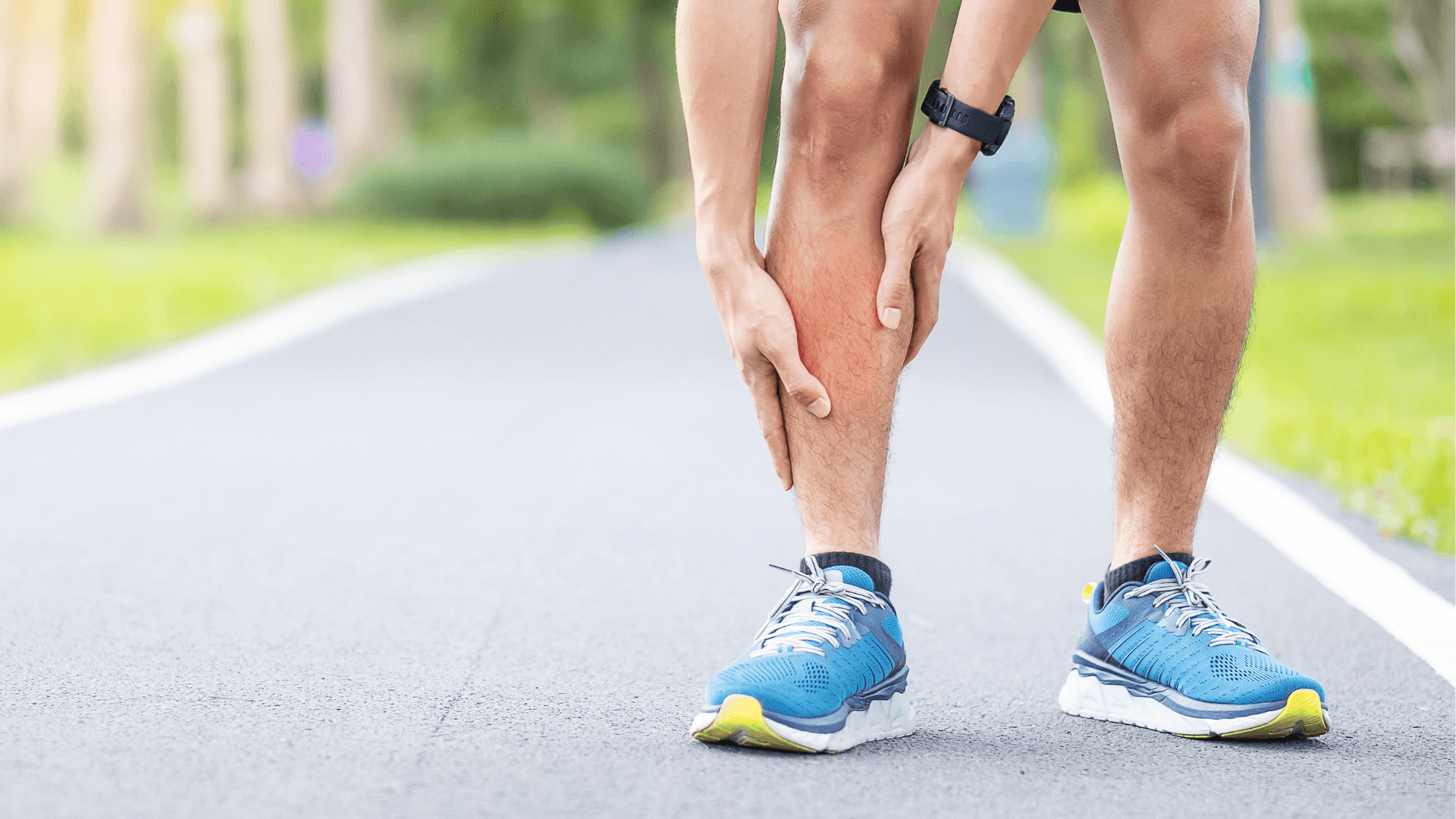
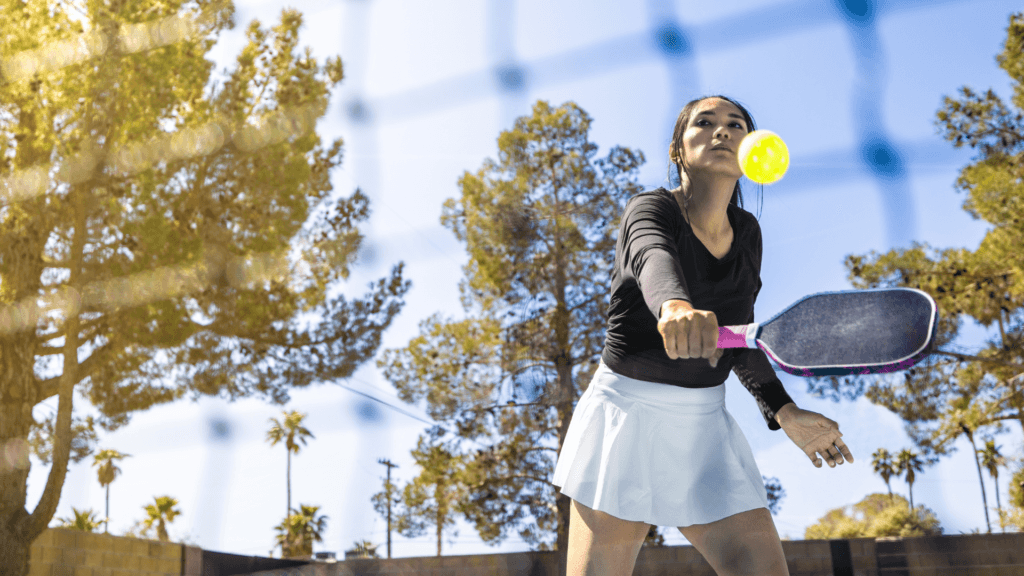
Pickleball is the fastest-growing sport in Victoria — and with it comes a growing number of pickleball injuries, from sore shoulders and cranky knees to rolled ankles. Here’s what the evidence says about the most common pickleball injuries and how physiotherapy in Victoria BC can help you recover and get back on court for good.
The Sport That Took Over Victoria
Drive past the courts at Cedar Hill, Gordon Head, or the Pickleball Victoria hub on a summer evening and you’ll see it: the paddles are out, the plastic balls are popping, and the sport that seemed to appear overnight now has a waitlist. Pickleball is easy to start, wonderfully social, and genuinely good for you. It’s also sending more people to physiotherapy clinics than ever before.
If you’ve picked up a paddle this year and your shoulder, elbow, knee, or ankle has started to complain, you’re in very good company. The demands of pickleball — quick lateral shuffles, sudden stops, overhead reaches, and a lot of repetitive gripping and swinging — put load on tissues that may not have played a fast-paced racquet sport in years, or ever. The good news is that most pickleball injuries respond extremely well to the right plan, and most of them are preventable.
At Pursuit Physiotherapy on Hillside Ave, we see the full range of pickleball complaints, in players from their twenties to their seventies. Let’s walk through what the research actually shows, and what to do about it.
RESEARCH STAT: Pickleball-related injuries presenting to US emergency departments rose from an estimated 1,313 in 2014 to 24,461 in 2023 — mirroring the sport’s explosive growth over the same decade.
Source: Increasing Incidence of Pickleball Injuries Presenting to US Emergency Departments: A 10-year Epidemiologic Analysis, 2025. PubMed ID: 39866953 (PMC11758564).
The Most Common Pickleball Injuries
Pickleball injuries fall into two broad buckets: overuse injuries that build up gradually from repeated load, and acute injuries that happen in a single moment — a slip, a lunge, a rolled ankle. Research suggests the overuse group is by far the larger one.
RESEARCH STAT: In a systematic review of recreational pickleball players, 34.2% reported at least one injury. The most commonly affected regions were the knee (23.3%), the elbow or forearm (18.1%), and the shoulder or upper arm (17.2%), and overuse mechanisms accounted for roughly 78% of injuries.
Source: Risk factor of pickleball injury: a systematic review and meta-analysis, 2024. (See also: Pickleball: A Standard Review of Injury Prevalence and Prevention, PubMed ID: 39079099.)
Shoulder and elbow
The repetitive overhead and driving motions of pickleball load the rotator cuff and the tendons around the elbow. “Pickleball elbow” is really lateral epicondylalgia — the same tendon problem as tennis elbow — driven by repeated gripping and wrist extension. Shoulder pain often comes from the cuff and the tissues around it being asked to do more overhead work than they’re currently conditioned for.
Source: Lippi et al., European Journal of Physical and Rehabilitation Medicine, 2024. PubMed ID: 39257331.
If heel pain is your issue, our ankle and foot pain resources cover the wider picture, and footwear or orthotics may play a supporting role.
Knee
The knee is the single most commonly injured region. The stop-start, pivot-heavy nature of the game loads the kneecap (patellofemoral) joint and the surrounding tendons, and sudden direction changes can strain ligaments. Players with a history of knee issues, or who ramp up their playing volume quickly, are especially prone.
Ankle and Achilles
Lateral ankle sprains happen when you plant, roll, or reach for a ball at the edge of your base. More concerning is the Achilles: the explosive push-off of a lunge can overload — and in some cases rupture — the tendon.
RESEARCH STAT: Foot and ankle injuries in pickleball players increased 6.5-fold between 2019 and 2023, and among foot and ankle injuries, Achilles tendon rupture was the single most common diagnosis (39.4%).
Source: Emerging Patterns of Foot and Ankle Injuries in Pickleball Players, 2024. PubMed ID: 39188128.
If you ever feel a sudden, sharp “pop” or a sensation like being kicked in the back of the ankle, followed by weakness pushing off — stop playing and get assessed promptly. That pattern can indicate an Achilles rupture, which is time-sensitive.
Why Pickleball Catches People Out
Pickleball has a reputation as a “gentle” sport, and that reputation is exactly the problem. Because it’s easy to learn and has a low barrier to entry, people often play a lot, quickly, and on consecutive days — before their bodies have adapted to the new demands. The research is consistent: playing more frequently, playing on back-to-back days, and being newer to the sport are all associated with a higher risk of pickleball injuries.
The underlying principle is one we come back to again and again at Pursuit: pickleball injuries can develop when load outpaces capacity. Your tissues can handle a great deal, but they adapt gradually. When the demand — hours on court, sudden sprints, overhead drives, and repeated lunges — rises faster than your muscles and tendons can build tolerance, something starts to complain. That’s not a reason to stop playing. It’s a reason to build capacity deliberately.
Age is a factor too, but not in the way people assume. Pickleball is beloved across generations, and a large share of injuries occur in players aged 60 to 79 simply because they make up a huge and enthusiastic part of the playing population. Pickleball injuries aren’t inevitable with age — but warm-ups, strength training, and gradual progression become even more important.
Active vs. Passive Treatment: Where Pursuit Stands
When something starts to hurt, it’s tempting to look for a passive fix — a machine, a modality, something done to you while you rest. For pickleball injuries, that approach falls short, because it doesn’t address the real issue: a mismatch between what the sport demands and what the tissue can currently tolerate.
You won’t find ultrasound, TENS, IFC, or laser machines at Pursuit. That’s a deliberate, evidence-based decision, not a gap in our services. The strongest evidence for the injuries pickleball produces — tendon problems at the elbow and shoulder, patellofemoral knee pain, ankle and Achilles issues — points to progressive loading, movement retraining, and graded return to play. Not passive electrotherapy applied to the surface.
PURSUIT PHILOSOPHY: Quality care over quick fixes. Your knee, shoulder, or Achilles didn’t get irritated because it lacked a machine — it got overloaded because the demand outpaced its capacity. Our job is to calm the tissue down and then rebuild that capacity, so you can lunge, drive, and pivot without flinching.
Active care for a pickleball injury at Pursuit typically starts with an accurate diagnosis and a short period of load management — not total rest. From there we build a progressive strength and control program targeting the specific tissue involved, retrain the movement patterns that got you into trouble, and stage your return to the court so you come back stronger than you left. Hands-on techniques support that plan; they don’t replace it.
How Physio and RMT Work Together on Court Injuries
At Pursuit, physiotherapy and registered massage therapy (RMT) operate from a shared model, and a pickleball injury is a good example of why that matters.
Your physiotherapist leads the plan: confirming the diagnosis, ruling out anything more serious (like an Achilles rupture or a significant ligament injury), building the progressive loading program, retraining your movement and footwork, and staging your return to play with objective checkpoints.
Your RMT prepares the ground. Skilled soft-tissue work can reduce the protective muscle tension around an irritable shoulder, forearm, or calf, improve circulation to loaded tissues, and create a comfortable window in which the active rehab work lands more effectively. Think of it as preparing the soil so the strengthening work can take root.
THE INTEGRATION PRINCIPLE: The RMT prepares the tissue; the physiotherapist rebuilds its capacity. Massage that isn’t followed by loading is temporary relief. Loading without addressing protective tension can stall. Together, sequenced intentionally, they move you forward faster than either alone.
Combined, multimodal approaches — hands-on care paired with progressive exercise and education — are well supported for the musculoskeletal complaints pickleball produces, and they reflect how we actually work day to day.
The Pursuit Approach to Pickleball Injuries
Every pickleball player who comes to Pursuit gets one-on-one time with a clinician — no assembly-line care, no generic handout. Here’s what that looks like in practice for a court injury:
– Define your goal. Getting back to a Tuesday night ladder is a different target than playing three tournaments this summer. We start with your “why.”
– Measure what matters. We assess the specific tissue — cuff strength, single-leg control, calf capacity, grip and forearm tolerance — and quantify the gap, so progress isn’t a guess.
– Personalized pain relief. Manual therapy, dry needling/IMS where appropriate, and smart load management to settle the irritable tissue.
– Tailored programming. A progressive strength and control program built for the demands of pickleball — lateral movement, deceleration, overhead control, push-off power.
– Retest metrics. We re-measure regularly to prove you’re ready for each next step, right up to full return.
– Fitness for life. We use our on-site gym to take you past “not injured” and into genuinely resilient — so next season starts from a stronger base.
The goal isn’t just to get you out of pain. It’s to build a body that handles the sport you love, for the long run.
Realistic Expectations
Here’s the honest part. Recovery from a pickleball injury isn’t always linear, and timelines vary with the tissue involved, how long the problem has been building, and how consistently you do the work. A grumpy tendon may take several weeks of progressive loading to settle and rebuild; an ankle sprain can turn a corner faster; an Achilles rupture is a much longer road.
We won’t promise you a specific number of sessions or a guaranteed return date — anyone who does is guessing. What we do guarantee is a thorough assessment, honest communication about what we’re seeing, an evidence-based plan tailored to you, and a team that coordinates its care. You’ll always know where you are and what the next step is.
Ready to Ride Comfortably Again
If pickleball has left you with a sore shoulder, a cranky knee, a tender elbow, or an ankle you don’t quite trust, you don’t need to wait it out or hope it fades. An accurate assessment and a progressive plan are the fastest route back to the game.
Pursuit Physiotherapy
📍 102B–740 Hillside Ave, Victoria, BC
🚗 Free 60-minute parking on site, and easily accessible by transit
📅 Book online: pursuitphysiotherapy.janeapp.com
📞 (250) 363-9707
✉️ info@pursuitphysiotherapy.ca
No referral needed — direct billing available to all major extended health insurers.
References
-
Increasing Incidence of Pickleball Injuries Presenting to US Emergency Departments: A 10-year Epidemiologic Analysis of Mechanisms and Trends. 2025. PubMed ID: 39866953. PMC11758564.
-
Emerging Patterns of Foot and Ankle Injuries in Pickleball Players: A Short Report. 2024. PubMed ID: 39188128.
-
Pickleball: A Standard Review of Injury Prevalence and Prevention in a Rapidly Growing Sport. 2024. PubMed ID: 39079099.
-
Risk factor of pickleball injury: a systematic review and meta-analysis. Health, Sport, Rehabilitation. 2024.
-
The Epidemiology of Pickleball Injuries Presenting to US Emergency Departments. 2025. PubMed ID: 40653665.