
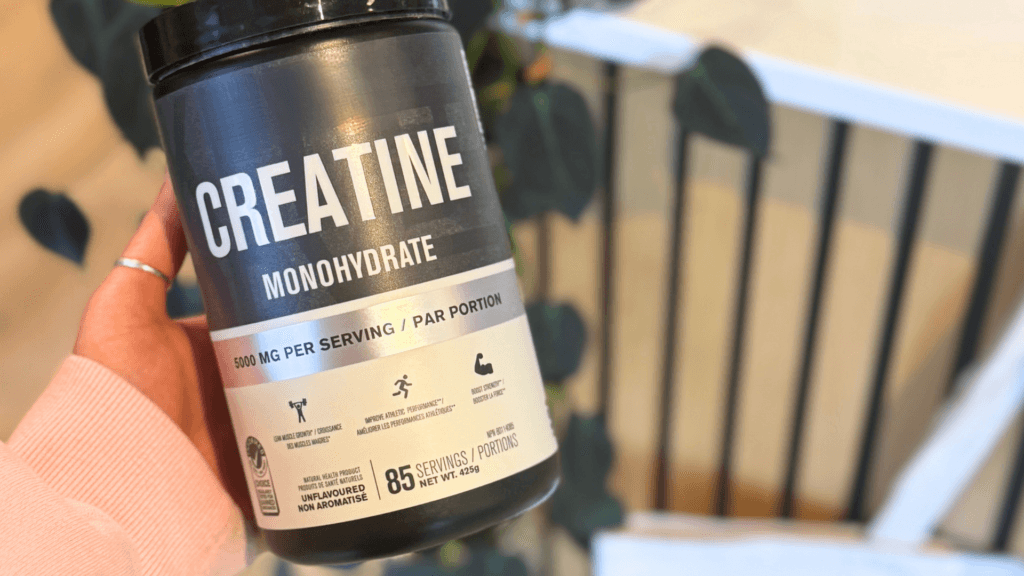
What Is Creatine?
Creatine and Muscle Health
Improved Strength and Exercise Performance
The strongest evidence supporting creatine supplementation relates to muscle performance. Numerous randomized controlled trials and meta-analyses have demonstrated that creatine supplementation increases strength, power output, and performance during high-intensity exercise, particularly when combined with resistance training.[2,3]
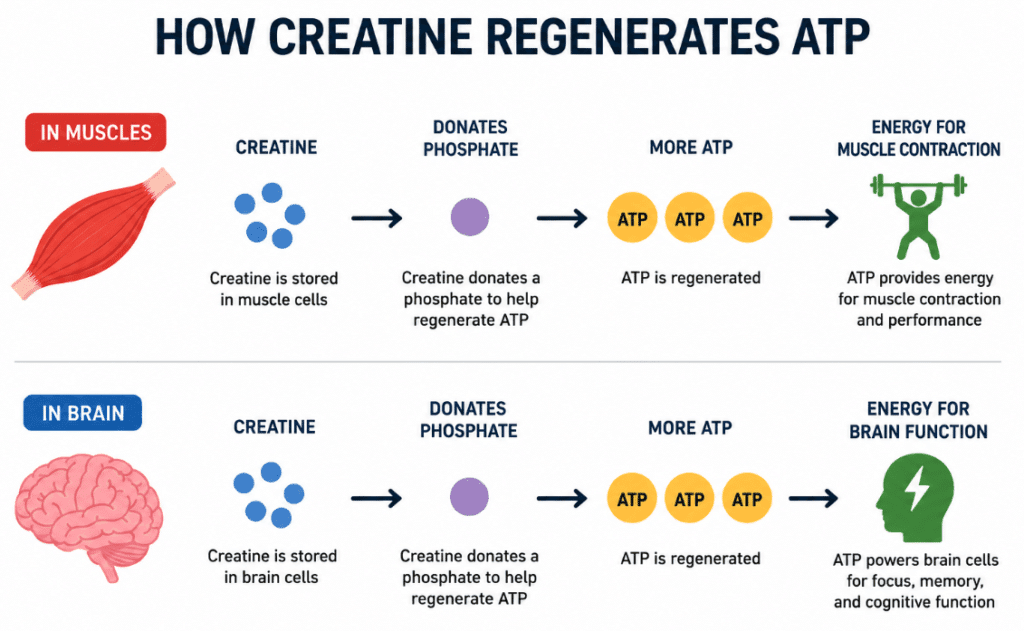
Creatine increases phosphocreatine stores within muscle cells, allowing the body to regenerate ATP more rapidly during short bursts of intense activity such as weightlifting, sprinting, and jumping.[1] This enhanced energy availability can improve training volume and recovery between exercise bouts, resulting in greater long-term adaptations to exercise.[2]
Increased Muscle Mass
A systematic review and meta-analysis found that creatine supplementation combined with resistance training resulted in significantly greater muscle hypertrophy than resistance training alone.[3] Researchers concluded that creatine provides a small but meaningful enhancement in muscle growth when paired with a structured exercise program.
For active individuals, athletes, and older adults seeking to preserve muscle mass, creatine remains one of the most evidence-based nutritional interventions available.[2]
Creatine and Brain Health
The Brain’s Energy Requirements
Although creatine is best known for its effects on muscle, the brain is one of the body’s most energy-demanding organs, consuming approximately 20% of the body’s energy at rest.[1] Creatine kinase enzymes are present throughout the central nervous system, highlighting the importance of the creatine system in maintaining brain energy metabolism.[1]
Researchers have proposed that increasing brain creatine stores may help support cognitive function during periods of increased metabolic demand, such as sleep deprivation, aging, neurological disease, or brain injury.[1]
Cognitive Performance
Current research suggests that creatine may improve certain aspects of cognitive function, particularly when the brain is under physiological/psychological stress or in older adults.[4,1]
Potential benefits identified in the literature include:
- Improved working memory
- Enhanced information processing
- Reduced mental fatigue
- Better cognitive performance during sleep deprivation
- Improved cognitive resilience during periods of physiological stress
When looking at the impacts of creatine in healthy individuals, current peer-reviewed evidence suggests promising but modest effects.[1] Benefits appear to be strongest when the brain is under some form of metabolic stress (e.g., sleep deprivation, aging, cognitive fatigue), rather than in young, healthy, well-rested adults. This supports the notion that creatine helps maintain ATP availability when energy requirements exceed normal supply, but may not have as prominent of effects when energy requirements are in the normal range.
Creatine and Concussion Rehabilitation
Creatine supplementation shows significant promise in facilitating concussion recovery by directly addressing the acute energy crisis and biochemical changes that follow the injury.[1,5] After a concussion, the brain experiences a depletion of ATP stores, which creatine helps mitigate by providing an immediate source of energy.[1,5]
Clinical research in children and adolescents has demonstrated that post-injury creatine administration can lead to improved cognitive functioning, better communication, and significant reductions in common post-concussive symptoms such as headaches, dizziness, and fatigue.[1,5] Although human brains require higher doses and longer periods than skeletal muscle to increase creatine levels, its robust safety profile makes it a viable strategy for enhancing recovery and potentially serving as a neuroprotective agent for those at high risk of head trauma.[1,5]
Impacts of Creatine in Men vs Women
Recent peer-reviewed research suggests that creatine has broadly similar effects in both men and women, but sex-specific evidence is still very limited. Creatine supplementation appears to improve muscle strength and training adaptations in both men and women, particularly when combined with resistance training.[2,3] However, most studies have been conducted in male-dominant samples, which limits confidence in precise sex comparisons.
Most systematic reviews and papers that show that creatine can increase brain phosphocreatine availability and support cognitive performance under conditions of metabolic stress rarely stratify results by sex or are not powered to detect sex differences.[1,4]
Where sex differences are discussed, they are mainly theoretical rather than proven. Women are consistently reported to have lower baseline creatine stores and potentially greater variability in brain energy metabolism across the menstrual cycle, pregnancy, postpartum period, and menopause, which may increase the potential relevance of supplementation.[1,5] However, female-specific intervention studies remain limited, and recent reviews of women’s supplementation literature show that while women respond positively to creatine for exercise performance, variability is higher and methodological gaps (e.g., menstrual cycle control) limit firm conclusions.[6]
Overall, current evidence does not demonstrate clear differences in brain-related effects of creatine between men and women—it mainly highlights that women are underrepresented in the research base rather than truly different responders.[1,4,6]
Clinical Takeaways
For clinicians, athletes, and patients alike, creatine represents one of the safest and most thoroughly studied nutritional supplements available. While the evidence supporting its effects on muscle performance is well established, research examining its neurological applications continues to evolve. The current evidence shows benefits of creatine under states of physiological or psychological stress, including neurological injury such as concussion. However, there is limited research on the benefits of creatine supplementation for brain health in healthy individuals and between sexes.
As our understanding of brain energy metabolism grows, creatine may become an increasingly important tool not only in sports performance but also in long-term brain health and neurological rehabilitation.
Moral of the story: Creatine is worth the hype for certain populations, including individuals aiming to increase muscle mass/strength, as well as older adults or those under stress such as sleep deprivation or neurological injury, where it may help support cognitive function.
References
- Roschel H, Gualano B, Ostojic SM, Rawson ES. Creatine supplementation and brain health. Nutrients. 2021;13(2):586. doi:10.3390/nu13020586.
- Wang Z, Qiu B, Li R, Han Y, Petersen C, Liu S, et al. Effects of Creatine Supplementation and Resistance Training on Muscle Strength Gains in Adults <50 Years of Age: A Systematic Review and Meta-Analysis. Nutrients. 2024;16(21):3665. doi: 10.3390/nu16213665.
- Burke R, Piñero A, Coleman M, Mohan A, Sapuppo M, Augustin F, et al. The effects of creatine supplementation combined with resistance training on regional measures of muscle hypertrophy: a systematic review with meta-analysis. Nutrients. 2023;15(9):2116. doi:10.3390/nu15092116.
- Avgerinos KI, Spyrou N, Bougioukas KI, Kapogiannis D. Effects of creatine supplementation on cognitive function of healthy individuals: a systematic review of randomized controlled trials. Exp Gerontol. 2018;108:166-173. doi:10.1016/j.exger.2018.04.013.
- Vietor FI, Sticher K, Ashraf KH. The Pathophysiology of Traumatic Brain Injuries and the Rationale Behind Creatine Supplementation as a Potential Therapy: A Review. Mo Med. 2025;122(1):60–66. PMID: 39958598.
- Tam R, Mitchell L, Forsyth A. Does creatine supplementation enhance performance in active females? A systematic review. Nutrients. 2025;17(2):238. doi:10.3390/nu17020238.