Surgery fixes the structure. Post surgery physiotherapy determines what you can do with it. Here’s why rehabilitation—before and after your operation—matters more than most people realize.
The Part of Surgery Nobody Tells You About
You’ve seen the orthopaedic surgeon. You have a date for your ACL reconstruction, your knee replacement, or your hip labral repair. You know what the surgery involves. What’s less clear is what comes next — and what you should be doing right now, before you even step into the operating room.
In Victoria, BC, many people show up to physiotherapy for the first time after surgery, wondering why their surgeon didn’t send them sooner. The answer is usually that surgical teams are focused on the operation, not the surrounding rehabilitation system. That’s where your physiotherapist comes in — and the earlier you involve them, the better your outcomes tend to be.
Whether you’re preparing for surgery, recovering from a recent procedure, or somewhere in the middle of a long rehabilitation journey, this article is for you.
Why Post Surgery Physiotherapy Is Essential After Orthopaedic Surgery
Surgery addresses the structural problem—a torn ligament, worn-out joint cartilage, or a damaged labrum. But surgery alone doesn’t restore function. It doesn’t rebuild the muscle strength you lost before and during the operation. It doesn’t retrain your nervous system to move with confidence and control again. And it doesn’t get you back to the trail run, the morning skate, or the long Victoria Waterfront walk you’ve been missing.
That’s where post surgery physiotherapy makes the difference.
Post surgery physiotherapy is the process of systematically rebuilding strength, mobility, neuromuscular control, and functional capacity after an operation. Through structured, evidence-based rehabilitation, it helps you recover more efficiently, reduce complications, and return to full function sooner than relying on rest and time alone.
The Case for Starting Before Your Surgery (Prehabilitation)
Here’s something the research is increasingly clear about: the state you’re in when you go into surgery strongly predicts how quickly and completely you recover coming out.
This is the principle behind prehabilitation — a structured physiotherapy programme begun before surgery with the goal of maximising strength, range of motion, and neuromuscular function prior to the operation. The idea is that stronger, better-prepared tissue recovers faster. You’re starting post-surgical rehabilitation from a higher baseline.
A 2025 systematic review published in Knee Surgery, Sports Traumatology, Arthroscopy analysed 36 studies involving 2,326 patients who completed prehabilitation before ACL reconstruction. The findings were striking: all clinical outcomes met or exceeded Patient Acceptable Symptom State (PASS) thresholds and return-to-sport criteria. Crucially, there were no preoperative complications associated with the prehabilitation programme itself.
RESEARCH STAT: A 2025 systematic review of 36 studies and 2,326 ACL patients found that prehabilitation prior to reconstruction is safe, produces no preoperative complications, and results in clinical outcomes that meet or exceed return-to-sport and patient acceptable symptom state thresholds.
Source: Zakharia et al., Knee Surg Sports Traumatol Arthrosc, 2025. DOI: 10.1002/ksa.12631. PMID: 40276858.
If you have a surgical date on the calendar, talk to your physiotherapist now. Even a few weeks of focused prehabilitation can meaningfully improve your post-operative starting point.
Common Surgeries That Benefit From Post Surgery Physiotherapy
ACL Reconstruction: One of the most common sports surgeries in Victoria’s active population. Full return to competitive sport typically takes 9-12 months.
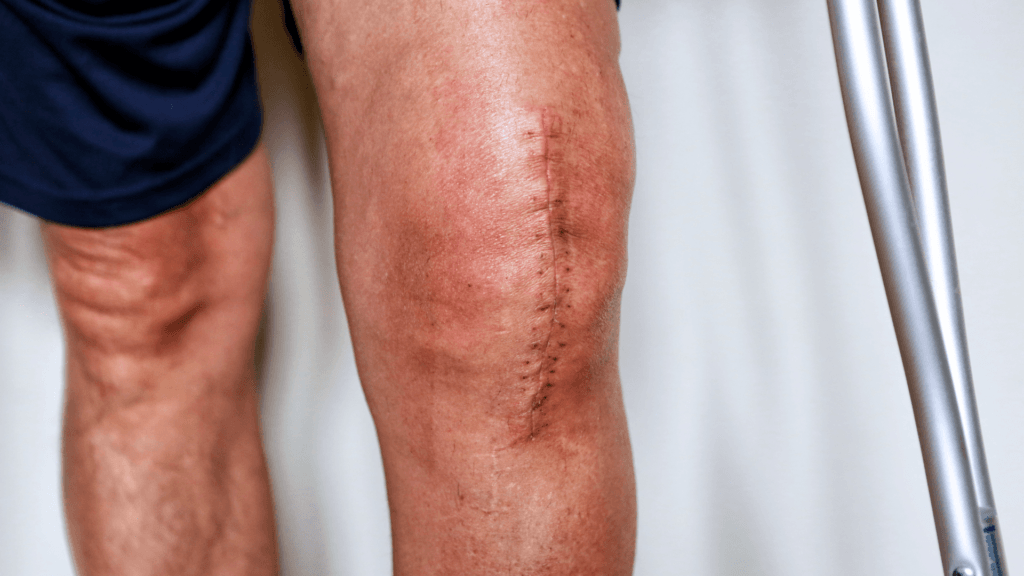
Knee Replacement (Total or Partial): Common after severe osteoarthritis. Post-surgical physio focuses on early mobility restoration, managing swelling, regaining full extension, and progressively rebuilding leg strength.
Hip Replacement (Total Hip Arthroplasty): Rehabilitation involves restoring range of motion within precaution guidelines, rebuilding hip and glute strength, and progressively returning to activities of daily living.
Hip Labral Repair: Physiotherapy carefully restores range of motion, reloads the hip progressively, and ensures the joint is stable enough to return to sport.
Meniscus Repair: Priority is protecting the healing tissue while restoring range of motion and rebuilding quad and hamstring function.
Rotator Cuff Repair: Physio progresses through phases of passive range of motion restoration, active range of motion work, and progressive strengthening over 3-6 months.
What Post Surgery Physiotherapy Actually Looks Like
At Pursuit, every post-surgical patient gets a one-on-one assessment. We review your surgical notes, understand your surgeon’s guidelines, and start from where you actually are.
Phase 1 – Protection and early recovery: Managing swelling, pain, and restoring initial range of motion.
Phase 2 – Rebuilding strength: Progressive loaded exercises targeting muscles inhibited by pain, disuse, or surgical approach.
Phase 3 – Functional retraining: Activities that replicate real-world demands — stairs, squatting, lateral movement, balance and proprioception challenges.
Phase 4 – Return to activity: Criteria-based return using objective measures (strength ratios, hop tests, functional assessments) rather than just time.
Active Rehabilitation vs. Passive Recovery
At Pursuit, we don’t use ultrasound, IFC, TENS, or passive electrotherapy as part of post surgery physiotherapy. Exercise drives recovery. Hands-on therapy combined with exercise — when timed and sequenced appropriately — is the approach that consistently produces the best outcomes.
PURSUIT PHILOSOPHY: Surgery is a beginning, not an end. What you build in the weeks and months that follow post surgery physiotherapy is what determines whether you get back to full function — or settle for something less. We don’t rush the process or cut corners on loading. We build you back properly.
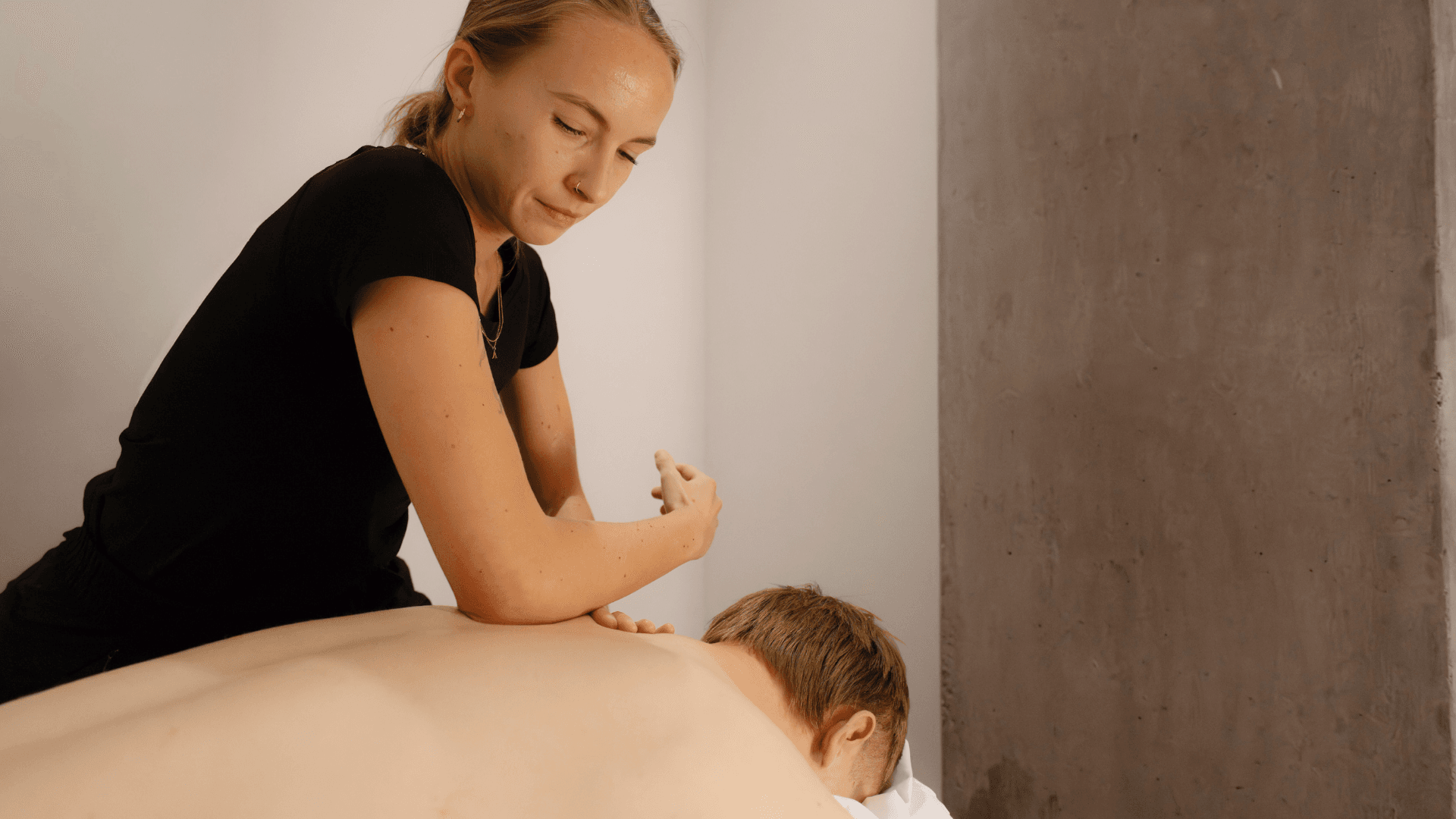
The Physio and RMT Partnership in Post-Surgery Physiotherapy Rehab
What the physiotherapist does: Directs the rehabilitation programme, ensures progression is appropriately timed, monitors for complications, and manages the exercise loading.
What the RMT does: Addresses the compensatory tension in muscles surrounding the surgical site — quadriceps and IT band after knee surgery, hip flexors and piriformis after hip replacement, upper trapezius and posterior shoulder capsule after rotator cuff repair.
THE INTEGRATION PRINCIPLE: After surgery, your body doesn’t just guard the operated joint — it braces the whole region. Manual therapy for surrounding tissues, paired with targeted exercise for the joint itself, accelerates the window in which real rehabilitation can happen.
Realistic Expectations for Post-Surgery Physiotherapy
- Outcomes are strongly influenced by the effort you put into your home programme between appointments
- Starting physiotherapy early — ideally before surgery — consistently improves post-operative results
- Criteria-based return to activity is safer and more effective than calendar-based return
- The goal at Pursuit is never just to get you “good enough.” It’s to get you back to full function, with the fitness and strength to stay there.
Book Your Achilles Treatment at Pursuit
Whether you’re recovering from surgery or seeking post surgery physiotherapy in Victoria BC, the right treatment can help you regain strength sooner and reduce the risk of ongoing pain or complications. At Pursuit, we provide individualized physiotherapy focused on restoring mobility, rebuilding function, and guiding you safely back to work, sport, and the activities you love.
Pursuit Physiotherapy
102B–740 Hillside Ave, Victoria, BC
Free 60-minute parking directly outside. Transit accessible (Hillside Ave at Blanshard and Douglas St. bus stops).
Direct billing available for all major extended health insurers. No physician referral required.
References
-
Zakharia A, et al. Prehabilitation prior to anterior cruciate ligament reconstruction is a safe and effective intervention for short- to long-term benefits: A systematic review. Knee Surg Sports Traumatol Arthrosc. 2025;33:4148-4166. DOI: 10.1002/ksa.12631. PMID: 40276858.
-
Alvarez AHD, et al. Functional Outcome of ACL Reconstruction Following Pre-reconstruction Rehabilitation vs. None Rehabilitation: A Systematic Review and Meta-analysis. PMC11007596.
-
Vikhe CS, et al. Effect of physiotherapy interventions on pain management, function and quality of life in patellofemoral pain syndrome. PLoS One. 2024;19(12):e0312279. DOI: 10.1371/journal.pone.0312279. PMID: 39700184.