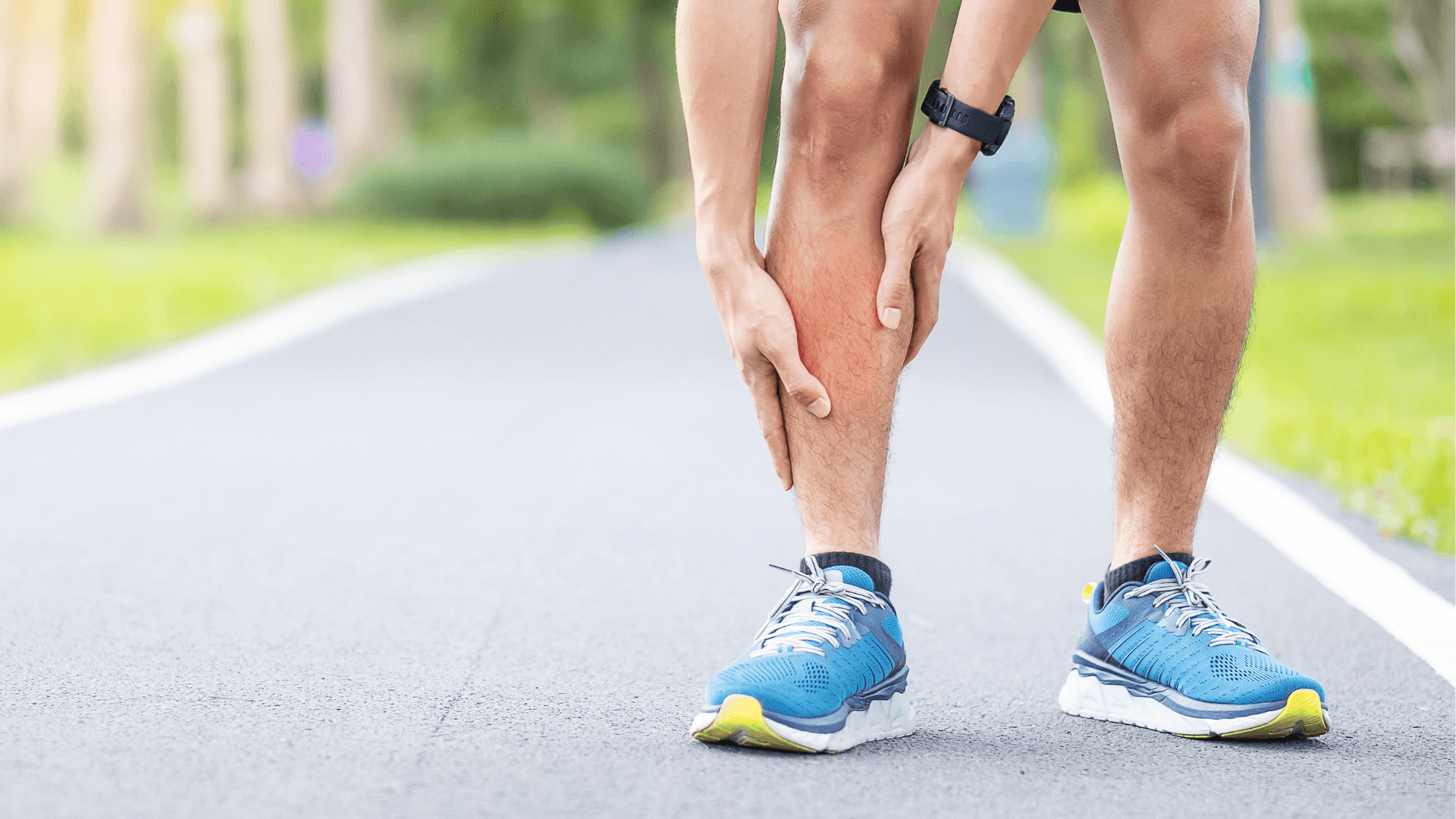
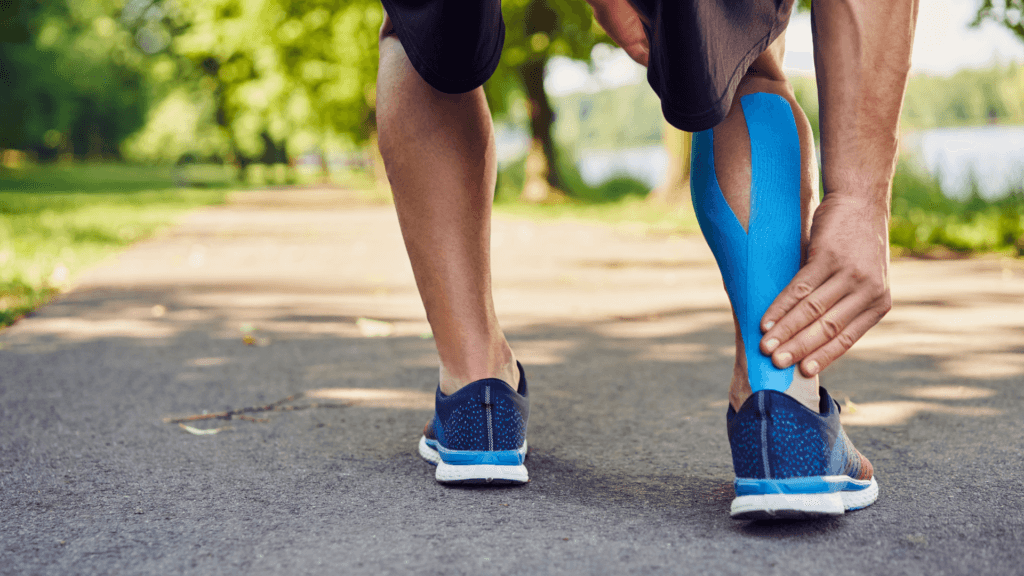
Achilles tendon pain—commonly searched as Achilles tendonitis—is often diagnosed more accurately as Achilles tendinopathy. While the terms are frequently used interchangeably, they describe different stages of the same condition. In Victoria BC’s active population, Achilles tendonitis is one of the most common overuse injuries—and one of the most commonly mismanaged. If rest hasn’t helped, here’s what the evidence actually says.
The Advice That Makes Achilles Tendinopathy Worse – Why Rest Often Fails
You start feeling that familiar ache at the back of your heel—maybe after a longer run along the Galloping Goose Trail, maybe gradually creeping in during your morning runs in Saanich. The stiffness in the first few steps out of bed. The tenderness when you press on your Achilles tendon. You’ve been told it’s Achilles tendonitis, and someone—your friend, a well-meaning colleague, maybe even a doctor—tells you to rest it.
So you do. You stop running your Achilles tendonitis flare-up. You take a few weeks off. And then you come back… and it’s the same Achilles tendonitis pain. Or worse.
Here’s what most people in Victoria aren’t told: for most cases of Achilles tendonitis (Achilles tendinopathy), rest is not the treatment. In fact, prolonged rest can make Achilles tendonitis more persistent, not less. The evidence on Achilles tendonitis management is consistent and has been building for over a decade—yet the advice most people receive is still to stop activity and wait.
At Pursuit Physiotherapy in Victoria, we don’t tell you to rest Achilles tendonitis and wait. We build a progressive loading program based on where your Achilles tendonitis sits in the continuum of tendon pathology—and we measure your progress along the way. This article explains what Achilles tendonitis actually is, why the tendon continuum model matters, and what evidence-based treatment for Achilles tendonitis looks like.
Achilles Tendonitis vs. Tendinopathy: What’s the Difference?
Achilles tendinopathy is a painful, degenerative condition of the Achilles tendon — the thick cord of connective tissue that runs from your calf muscles (the gastrocnemius and soleus) to your heel bone (the calcaneus). It is one of the most common running-related injuries, affecting both recreational and competitive athletes, and it is particularly prevalent in the active 30-60 age group.
The word “tendinopathy” is intentionally used here rather than “tendinitis.” The “itis” suffix implies inflammation, and while inflammation is present in acute presentations, the persistent form of this condition involves structural changes to the tendon tissue itself: disorganised collagen fibres, increased vascularity, and changes in the tendon’s mechanical properties. This is not primarily an inflammatory condition; it’s a failed healing response.
Research Stat: A 2023 systematic review and meta-analysis in the Orthopaedic Journal of Sports Medicine confirmed that exercise loading protocols are significantly superior to passive treatment modalities for the management of midportion Achilles tendinopathy in terms of pain and function outcomes.
Achilles tendinopathy can present in two main locations: midportion (2-6 cm above the heel) and insertional (at the point where the tendon attaches to the heel bone). These are different conditions with different treatment protocols — an important distinction your physiotherapist will assess from the start.
Source: Maetz et al., Orthopaedic Journal of Sports Medicine, 2023. DOI: 10.1177/23259671231171178.
The Tendon Continuum Model: Why Stage Matters
To understand why rest fails and loading helps, you need to understand the tendon continuum model — the framework that guides contemporary evidence-based management of Achilles tendinopathy.
The continuum describes three stages of tendon pathology:
Stage 1: Reactive Tendinopathy
Acute stage — a non-inflammatory cellular response to a sudden overload. The tendon reacts by increasing cellular activity and temporarily thickening. This stage is reversible with appropriate load management. Treatment focuses on load modification (not elimination), pain management, and addressing the training error.
Stage 2: Tendon Dysrepair
The tendon has tried to repair itself but hasn’t quite succeeded. There’s disorganised collagen and structural changes — but the pathology is still concentrated. Progressive loading is the primary treatment here. The tendon needs graded mechanical stress to stimulate collagen remodelling.
Stage 3: Degenerative Tendinopathy
The tendon has areas of significant structural disruption. This is the chronic, long-standing form. It responds most slowly to loading and may require a longer, more carefully graduated program.
The key clinical insight: you cannot rest your way from stage 2 or 3 to stage 1. The tendon needs load — calibrated, progressive, specific load — to stimulate the collagen remodelling that drives recovery.
The Evidence for Progressive Loading
The research on this is consistent. A 2023 systematic review and meta-analysis of randomized controlled trials compared exercise loading protocols with passive treatment modalities for midportion Achilles tendinopathy. The conclusion: exercise loading protocols significantly outperformed passive approaches in terms of pain reduction and functional improvement.
A separate systematic review examined the effects of exercise treatment on functional outcome parameters in midportion Achilles tendinopathy. The evidence confirmed that progressive loading — including both eccentric exercise and heavy slow resistance training — produces reliable improvements in pain scores, tendon stiffness, and patient-reported function.
Evidence-supported loading programs follow a staged protocol:
Stage 1 — Isometric loading: Sustained contractions with no joint movement. Used in the reactive phase to modulate pain without creating additional mechanical stress.
Stage 2 — Isotonic loading: Moving through range under load. Eccentric calf raises and heavy slow resistance training both produce strong outcomes.
Stage 3 — Energy storage loading: Plyometric exercises — hopping, bounding, sports-specific movements. Used in final stages before return to running loads.
Stage 4 — Return to running: A structured, graduated running reintroduction using a walk-run protocol, building volume before intensity.
We don’t hand you an eccentric heel drop protocol and send you home. We assess where you are in the tendon continuum, design a loading program appropriate to your stage, measure your response, and progress you through each phase based on what your tendon is actually doing — not what the calendar says.
Why Your Achilles Needs to Work
Passive treatments — ultrasound, TENS, IFC, or prolonged icing — are not supported by evidence as primary treatments for tendinopathy. At Pursuit we don’t use them. The tendon is a mechanical tissue that responds to mechanical input. Passive modalities don’t provide the stimulus needed to remodel it.
What does change the structural pathology? Load. Specifically:
– Progressive isotonic loading stimulates fibroblast activity and drives collagen reorganisation in the tendon matrix
– Neuromuscular training restores the kinetic chain deficits (hip weakness, foot mechanics, running gait issues) that caused the tendon to be overloaded in the first place
– Gait and training load analysis identifies modifiable factors — stride length, cadence, footwear, weekly mileage — that are maintaining the problem
At Pursuit, an Achilles assessment doesn’t start and end at the heel. We assess the entire kinetic chain: hip abductor and external rotator strength, ankle dorsiflexion mobility, calf endurance capacity, and running mechanics on treadmill where relevant.
Research Stat: A 2023 systematic review confirmed that exercise loading programs are superior to passive treatment modalities for midportion Achilles tendinopathy. Heavy slow resistance training produced outcomes equivalent to eccentric training but with higher patient satisfaction.
Source: Maetz et al., Orthopaedic Journal of Sports Medicine, 2023. DOI: 10.1177/23259671231171178.
The Physio + RMT Integration for Tendinopathy (Tendonitis) Rehab
At Pursuit, our physiotherapists and registered massage therapists coordinate their care. When the Achilles is painful and reactive, the calf complex often develops secondary myofascial tension — a protective response that increases resting tension on the tendon and slows recovery.
RMT targeted at the calf, proximal hamstring, and Achilles peritendinous tissue reduces this protective tone and improves tissue pliability needed for effective loading. Soft tissue work before the loading session creates a better mechanical environment for exercise.
Think of the RMT as preparing the calf complex for loading, and the physiotherapist as driving the loading itself. The combination allows the tendon stimulus to be more effective — and the patient to tolerate higher loads sooner in the program.
Pursuit Approach to Achilles Tendinopathy
Every Achilles patient at Pursuit begins with a thorough one-on-one assessment. The Pursuit Process from there:
Define Your Goal — Return to trail running the Gowlland Tod? Build toward the TC10K? Your goal determines the endpoint we’re building toward.
Measure What Matters — Calf endurance via standardised heel raise protocols, ankle dorsiflexion range, hip strength, running gait if indicated. All measured at baseline and retested.
Personalized Pain Relief — Stage-appropriate loading, dry needling to the calf complex if indicated, pain neuroscience education.
Tailored Programming — Your loading program progresses stage by stage based on how your tendon responds — not what week of a generic protocol you’re on.
Retest Metrics — Calf strength, single-leg heel raise performance, pain response to loading — all retested regularly to guide progression.
Fitness For Life — Once the tendon is rehabilitated, we address the running mechanics and strength program that reduce the risk of recurrence.
Realistic Expectations for Treatment
Reactive tendinopathy presenting early and managed correctly often resolves in 6-12 weeks. Chronic, degenerative presentations may take 3-6 months or longer with a consistent loading program. The key variable: are you doing the right type of loading, progressively enough, consistently enough?
What we won’t do is promise you’ll be back to full training in six weeks. What we will promise is an honest assessment, a program that changes based on your measured response, and a team that understands both the physiology of tendinopathy and the goal of getting you back to doing what you love in Victoria’s outdoors.
Book Your Achilles Treatment at Pursuit
Whether you’re dealing with Achilles tendonitis, Achilles tendinopathy, or ongoing Achilles tendon pain, the right treatment can help you recover sooner and reduce the risk of the problem becoming chronic. At Pursuit, we provide individualized physiotherapy in Victoria BC focused on relieving pain, improving tendon function, and guiding you safely back to the activities you love.
Pursuit Physiotherapy
102B–740 Hillside Ave, Victoria, BC
Free 60-minute parking directly outside. Transit accessible (Hillside Ave at Blanshard and Douglas St. bus stops).
Direct billing available for all major extended health insurers. No physician referral required.
References
-
Maetz R, Dube M-O, Tougas A, Prudhomme F, Dubois B, Roy J-S. Systematic Review and Meta-analyses of Randomized Controlled Trials Comparing Exercise Loading Protocols With Passive Treatment Modalities or Other Loading Protocols for the Management of Midportion Achilles Tendinopathy. Orthopaedic Journal of Sports Medicine. 2023. DOI: 10.1177/23259671231171178. PMC10240875.
-
Effects of exercise treatment on functional outcome parameters in mid-portion Achilles tendinopathy: a systematic review. Frontiers in Sports and Active Living. 2023. PMC10230026.
-
Cook JL, Purdam CR. Is tendon pathology a continuum? A pathology model to explain the clinical presentation of load-induced tendinopathy. British Journal of Sports Medicine. 2009;43(6):409-416. DOI: 10.1136/bjsm.2008.051193.