Whether you’re training for the TC10K, exploring the trails on Mount Doug, or simply trying to run pain-free, a professional running assessment in Victoria BC gives you answers that no amount of trial-and-error will. So what is a Running Assessment? Find out how a running assessment can help prevent injuries and improve your performance.
You’ve Been Running For Years — Why Would You Need an Assessment?
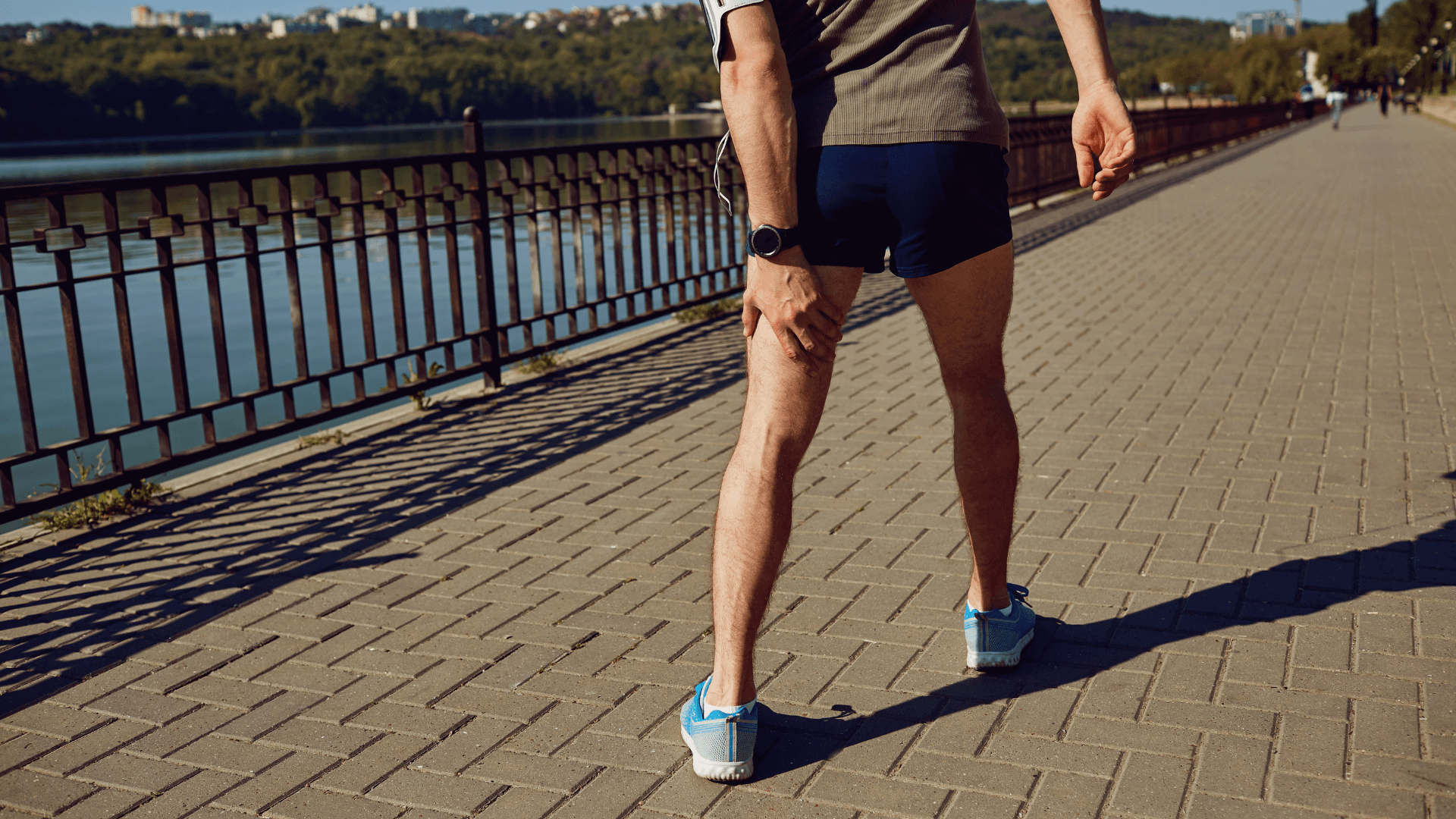
Most runners in Victoria don’t think about their gait until something goes wrong. A knee starts complaining on the Galloping Goose. The Achilles gets angry after a push on the Cedar Hill trail. The hip flexors tighten up every time the weekly mileage climbs past 40 km.
Then the pattern begins: rest, recover, return, repeat. The injury comes back. Or a different one takes its place.
Here’s what most runners don’t realize: injuries don’t happen because running is inherently dangerous. They happen because of a mismatch between training load and tissue capacity — and often, that mismatch is driven by movement patterns, biomechanical faults, or strength deficits that have been quietly building long before the pain showed up.
A professional running assessment doesn’t just tell you what’s wrong. Done well, it tells you why — and it gives you a plan to address it before it becomes an injury. At Pursuit Physiotherapy in Victoria, our running assessments are one-on-one, evidence-informed, and built for real runners: recreational joggers, marathon hopefuls, trail enthusiasts, and everyone in between.
How Common Are Running Injuries, Really?
Running is accessible, effective, and widely practiced across Victoria — from the waterfront to the Galloping Goose to the Hartland trails. It’s also one of the most injury-prone activities in sport.
Research consistently shows that running injuries are extremely common among recreational runners, with annual injury incidence rates reported between 26% and as high as 79% depending on the population studied.
Source: A systematic review of running-related musculoskeletal injuries in runners. PMC8500811.
Runners with a prior history of injury are approximately twice as likely to sustain a new running-related injury compared to those with no injury history.
Source: Recreational Runners With a History of Injury Are Twice as Likely to Sustain a Running-Related Injury as Runners With No History of Injury: A 1-Year Prospective Cohort Study. JOSPT, 2021. DOI: 10.2519/jospt.2021.9673.
The most common running-related injuries — patellofemoral pain syndrome, IT band syndrome, plantar fasciitis, Achilles tendinopathy, and tibial stress reactions — are not random events. They have identifiable biomechanical contributors that a skilled physiotherapist can see, measure, and address.
Research Stat: Annual running injury rates in recreational runners range from 26% to nearly 50%, with prior injury history doubling the risk of future injury. Most running injuries have identifiable and modifiable biomechanical contributors.*
*Source: PMC8500811 and JOSPT, 2021. DOI: 10.2519/jospt.2021.9673.*
What is a Running Assessment?
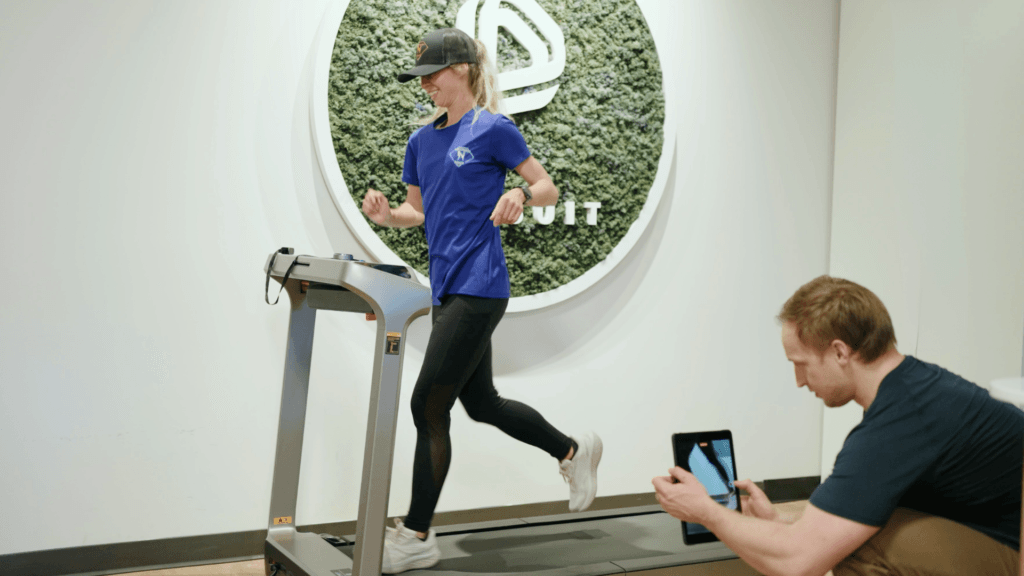
A running assessment at Pursuit is not just someone watching you run on a treadmill for five minutes. It’s a structured, clinical process using video analysis, objective strength testing, and movement screening to build a complete picture of how you run and what’s limiting your performance or putting you at risk.
Intake and History
Before you step on the treadmill, we understand your context: training history, current weekly mileage, injury history, goals, and any current symptoms. Your gait doesn’t exist in isolation from your training — and your training program is part of the assessment.
Movement Screen
We assess hip mobility and rotational capacity, ankle dorsiflexion range (a major factor in knee and Achilles loading), single-leg squat mechanics (hip, knee, and trunk control), calf and hip abductor endurance, and core stability under dynamic loading. Restrictions or weaknesses here appear as compensatory gait changes when you run.
Treadmill Video Gait Analysis
You run at your normal training pace while we capture video from the front, side, and rear. We use slow-motion playback to assess:
- Cadence (steps per minute)
Lower cadence is associated with increased vertical impact loading and injury risk. Most recreational runners benefit from increasing cadence by 5-10%. - Vertical oscillation
How much you’re “bouncing” with each step. High vertical oscillation means energy is wasted moving you up and down rather than forward. - Foot strike pattern
Where your foot contacts the ground in relation to your centre of mass. Overstriding is one of the most common gait faults and is associated with increased braking forces and patellofemoral load. - Trunk mechanics and lateral deviation
Pelvic drop, lateral trunk lean, arm swing asymmetry — all signalling hip abductor weakness or neuromuscular control deficits. - Knee and hip alignment
Knee valgus during the stance phase is one of the most consistent predictors of patellofemoral pain and IT band syndrome. Usually driven by hip abductor weakness.
Load Audit
We review your training log. Sudden mileage increases, inadequate recovery, surface changes, and footwear transitions are the most common environmental contributors to running injury.
Findings, Education, and Plan
Clear summary: what we found, why it matters, and exactly what to do about it. You leave with a specific, individualized plan.
What a Gait Analysis Reveals That You Can’t See Yourself
Running is an automatic movement. Compensatory patterns become so ingrained that you feel normal even when your mechanics are working against you. Without video and slow-motion playback, these patterns are invisible.
Common findings in Victoria’s recreational runners:
- Overstriding— foot landing 15-20 cm ahead of the body, creating a braking force with every step. Increasing cadence by 5% reduces patellofemoral stress significantly.
- Contralateral pelvic drop (“Trendelenburg gait”) — the hip drops on the opposite side of the stance leg, signalling weak hip abductors. Directly implicated in IT band syndrome, runner’s knee, and hip pain.
- Reduced ankle dorsiflexion in swing phase — limits stride length and forces compensation through increased lumbar extension or excessive hip adduction.
- Arm swing asymmetry — often reflects an old injury that has been “worked around” and is now generating rotation through the trunk.
A 2022 systematic review and meta-analysis in the Journal of Orthopaedic & Sports Physical Therapy confirmed that gait retraining interventions — including step rate modification — alter running kinematics, lower vertical loading rates, and reduce pain in distance runners without negatively affecting running performance.
Source: Effectiveness of Gait Retraining on Running Kinematics, Kinetics, Performance, Pain, and Injury in Distance Runners: A Systematic Review With Meta-analysis. JOSPT, 2022. PMID: 35128941. DOI: 10.2519/jospt.2022.10585.
Research Stat: A 2022 systematic review confirmed that running gait retraining interventions reduce pain and alter running biomechanics in distance runners without affecting performance. Step rate modification is particularly effective at reducing patellofemoral and tibial loading.*
*Source: JOSPT, 2022. PMID: 35128941. DOI: 10.2519/jospt.2022.10585.*
Active Rehabilitation — What Happens After the Assessment
A running assessment without a follow-through plan is just information. At Pursuit, the assessment is the start of your program — not the end.
Depending on your findings, your plan may include:
- Strength training targeting identified deficits — hip abductors, glutes, calf endurance, ankle stability. Weakness in these systems is the single most common modifiable contributor to running injury.
- Gait retraining cues — specific, individualized movement cues to address identified faults. Research supports cue-based gait retraining as an effective approach to modifying running mechanics.
- Load management guidance — a restructured training plan that respects your tissue capacity, builds mileage appropriately, and includes adequate recovery.
- Footwear review — where relevant, how your current footwear interacts with your mechanics.
- Dry needling — for runners with active myofascial trigger points in the hip external rotators, TFL, or calf complex that are limiting movement quality.
We don’t use ultrasound, IFC, or TENS in running rehabilitation. These passive modalities don’t address the mechanical and neuromuscular contributors to running injury. What changes running injuries is changing the loads and the movement patterns — and that requires active, targeted rehabilitation.
Pursuit Philosophy: A running assessment at Pursuit is not a performance luxury — it’s evidence-based injury prevention. Every runner in Victoria has a gait. The question is whether it’s working for you or against you. We find out — then we fix it.
The Physio + RMT Approach for Runners
Many of Victoria’s runners carry chronic myofascial tension from years of training — particularly in the hip flexors, TFL, glutes, and calves. This tension affects movement quality and limits mobility.
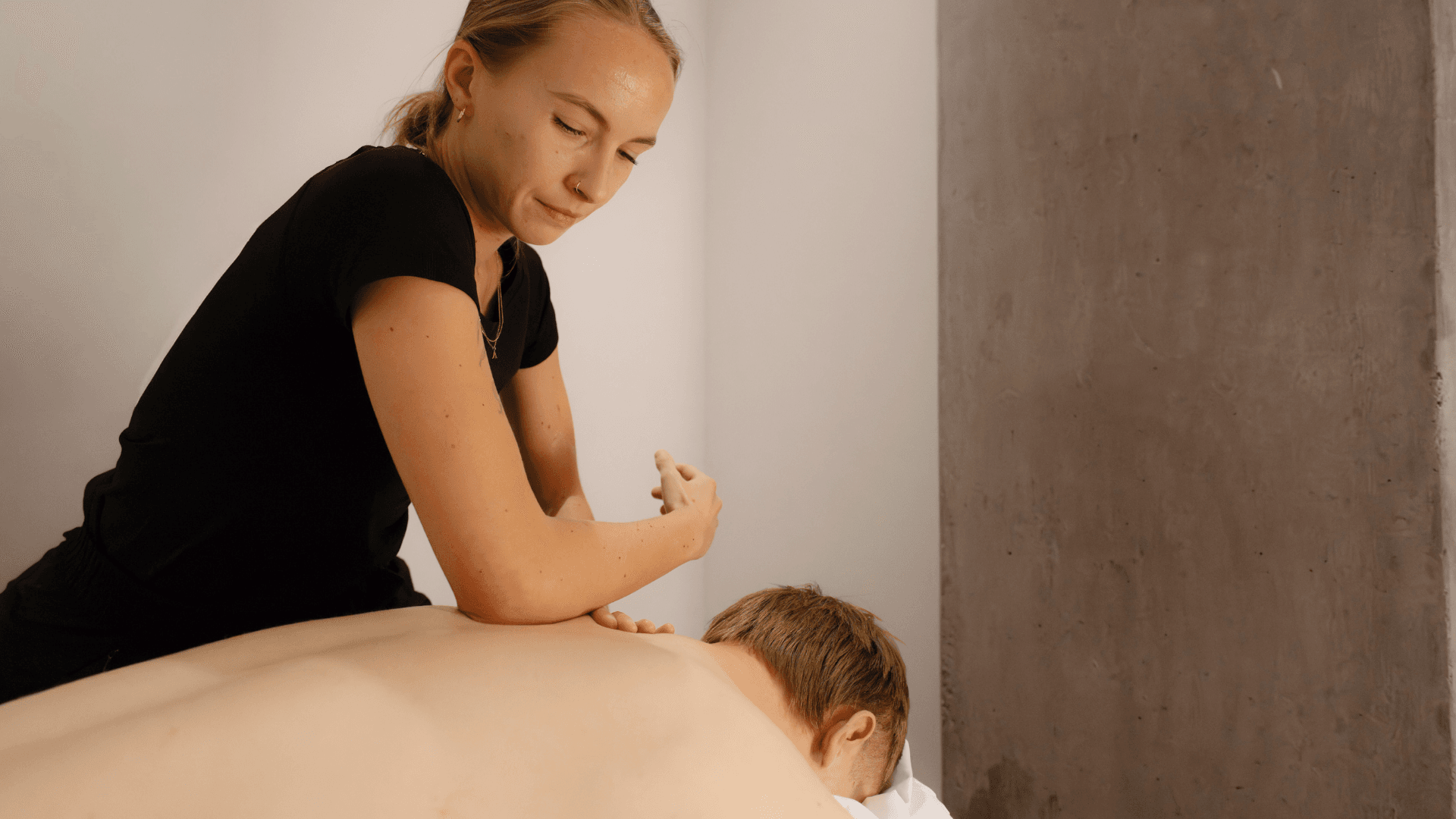
At Pursuit, our RMTs work alongside our physiotherapists to address soft-tissue restriction as a complement to the mechanical and strength work. RMT reduces protective tone in the posterior chain and hip complex before a physiotherapy session — making the movement assessment more accurate and the exercise work more effective.
For runners, soft tissue work by the RMT and movement retraining by the physiotherapist are not competing treatments — they’re a coordinated sequence. The RMT reduces the noise; the physiotherapist teaches the signal.
Who Should Get a Running Assessment?
A running assessment is a valuable tool for any runner who wants to understand movement, prevent injury, or improve performance. If you’re asking what is a running assessment, it’s a detailed evaluation of your gait, strength, and training load that helps identify what may be contributing to pain or inefficiency in your running.
- Injured runners — if you have a current or recurring injury, a running assessment identifies the contributing mechanics rather than just treating the symptom.
- Returning runners — if you’ve taken time off, a gait screen identifies what may have changed and what needs addressing before mileage builds.
- Runners ramping up training — heading toward TC10K, a first half-marathon, or a fall trail race? The time to assess mechanics is before the load increases.
- Asymptomatic runners — you don’t have to be in pain to benefit. Many mechanical contributors to injury are present and addressable before they cause symptoms.
The Pursuit Process for Runners
A running assessment is a structured, evidence-based process designed to understand how you move, identify what may be contributing to pain or inefficiency, and build a clear plan for improvement. If you’re wondering what is a running assessment, it’s a detailed evaluation of your gait, strength, and training load that helps guide diagnosis and treatment. In a typical running assessment, each step—from goal setting to retesting—is used to ensure your program is specific, measurable, and tailored to your needs.
- Define Your Goal
TC10K? Trail ultra? Run pain-free? Your goal determines the entire direction of the plan. - Measure What Matters
Hip abductor strength, calf endurance, ankle dorsiflexion, cadence, vertical loading rate, pelvic control in slow-motion video. All measured, all documented. - Personalized Pain Relief
If you’re currently injured, we address the injury alongside the mechanics. - Tailored Programming
Your strength program is built around your specific deficits. Your gait retraining is built around your specific faults. - Retest Metrics
Cadence, hip strength, ankle range — all retested at 4-6 weeks to confirm the program is working. - Fitness For Life
The goal isn’t just to get you back running. It’s to give you the mechanical foundation to keep running for decades in Victoria’s landscape — trails, seawall, roads, and beyond.
7 Key Insights on What is a Running Assessment
What is a Running Assessment is more than just a gait check—it’s a detailed look at how you move, train, and load your body while running. These 7 key insights break down what a running assessment involves and why it’s an important tool for injury prevention and performance.
- Running injuries are often caused by load vs capacity mismatch
- Not “bad running,” but training load exceeding tissue capacity.
- Prior injury significantly increases future injury risk
- Runners with past injuries are ~2x more likely to get re-injured.
- Most running injuries have identifiable biomechanical causes
- They’re not random—patterns can be measured and changed.
- A running assessment includes more than watching you run
- It combines history, movement screening, and video gait analysis.
- Key gait factors influence injury risk
- Cadence, vertical oscillation, foot strike, and alignment matter.
- Strength and mobility deficits often drive faulty running mechanics
- Especially hips, calves, and ankle dorsiflexion limitations.
- Gait retraining and load management can reduce pain and injury risk
- Evidence shows biomechanical changes and pain reduction are possible.
Realistic Expectations
Research on gait retraining shows meaningful biomechanical changes within 6-8 weeks of consistent practice — but those changes require conscious rehearsal until they become automatic. Gait retraining is a learning process. The cues need to be practised, the strength needs to be built, and the load needs to be managed carefully during the transition.
The runners who go through this process tend to get injured less often, run further, and feel significantly better doing it.
Book Your Running Assessment at Pursuit
If you’re wondering whether dry needling or IMS is the right next step for your recovery — come in and find out. A thorough assessment is the starting point. We don’t apply tools without understanding your full picture first.
Pursuit Physiotherapy
102B–740 Hillside Ave, Victoria, BC
Free 60-minute parking directly outside. Transit accessible (Hillside Ave at Blanshard and Douglas St. bus stops).
No referral needed. Direct billing available to Canada Life, Pacific Blue Cross, Manulife, Sun Life, Desjardins, Empire Life, and more.
References
-
A systematic review of running-related musculoskeletal injuries in runners. PMC8500811.
-
Recreational Runners With a History of Injury Are Twice as Likely to Sustain a Running-Related Injury as Runners With No History of Injury: A 1-Year Prospective Cohort Study. Journal of Orthopaedic & Sports Physical Therapy, 2021. PMID: 33356768. DOI: 10.2519/jospt.2021.9673
-
Doyle et al. The Effectiveness of Gait Retraining on Running Kinematics, Kinetics, Performance, Pain, and Injury in Distance Runners: A Systematic Review With Meta-analysis. Journal of Orthopaedic & Sports Physical Therapy, 2022. PMID: 35128941. DOI: 10.2519/jospt.2022.10585.