Clicking, aching, locking, or headaches that start at your jaw — temporomandibular disorders are common, treatable, and often misunderstood. Here’s what the research says about TMJ physiotherapy in Victoria BC, including the jaw pain that can follow a car accident.
The Joint You Never Think About — Until It Hurts
You use your temporomandibular joints — the two hinge-and-glide joints just in front of your ears — every time you chew, talk, yawn, or clench. Estimates put that at well over a thousand jaw movements a day. Most of the time, they work so smoothly you forget they exist.
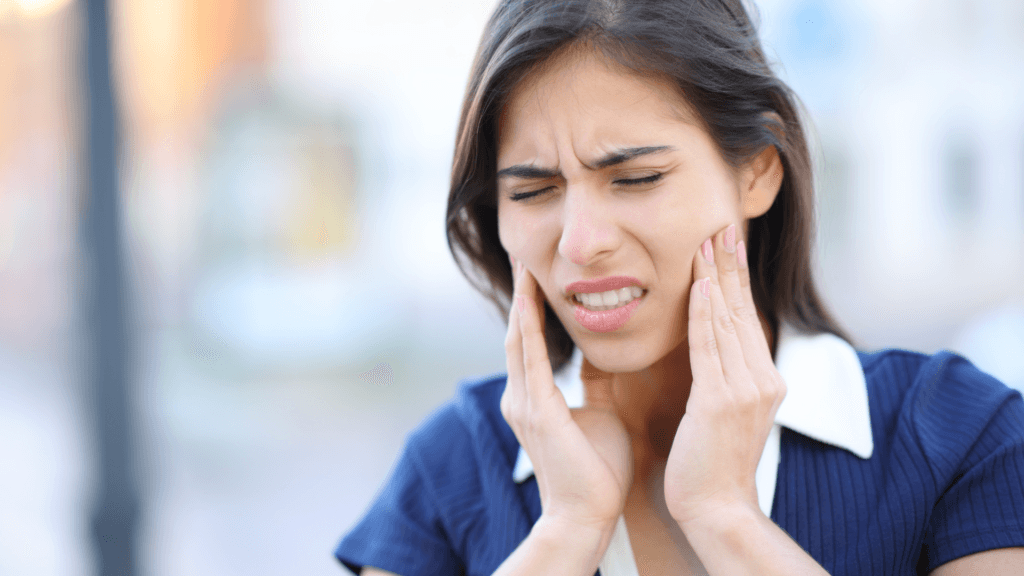
Then one morning your jaw clicks when you bite into a bagel from the Hillside bakery. Or it aches after a long day of meetings. Or you wake with a tension headache that seems to start at your temples and jaw rather than your neck. Maybe your jaw catches or locks partway open. If any of that sounds familiar, you’re dealing with what clinicians call a temporomandibular disorder, or TMD — and you’re far from alone.
TMD is one of the most common causes of orofacial pain, and it sits squarely in physiotherapy territory. The temporomandibular joint is a joint like any other: it has cartilage, a disc, ligaments, and muscles that move and stabilize it. And like any other joint, it responds to assessment, graded loading, manual therapy, and education — not just to a night guard and a wait-and-see approach.
At Pursuit Physiotherapy on Hillside Ave, we assess and treat jaw pain the same way we approach any musculoskeletal problem: find the driver, measure what matters, and build a plan that restores function.
Pursuit Philosophy: The jaw doesn’t exist in isolation. It shares muscles, nerves, and movement patterns with your neck and upper back. That’s why a proper TMD assessment at Pursuit always includes the cervical spine — treating the jaw alone often means treating only half the problem.
What Actually Causes TMJ Pain?
“TMJ” is technically just the name of the joint — the temporomandibular joint. When the joint or the muscles around it become painful or stop moving well, that’s a temporomandibular disorder (TMD). TMD isn’t one single diagnosis. It’s a family of related problems, and figuring out which one you have is the first job of a good assessment.
The most common contributors include:
Muscle overactivity and clenching. The masseter and temporalis muscles — your main chewing muscles — are among the strongest in the body for their size. Sustained clenching or grinding (often stress-related, often at night) can overwork them, producing aching, fatigue, and referred pain into the temples and face.
Joint and disc problems. Each TMJ contains a small cartilage disc that glides as you open and close. If the disc’s movement becomes uncoordinated, you may feel clicking or popping. In some cases the disc can restrict opening — the sensation of the jaw “catching” or locking.
Neck involvement. The upper cervical spine and jaw share sensory nerve pathways through the trigeminocervical system. Neck dysfunction can refer pain to the jaw and face, and vice versa. This is one reason jaw pain and headaches so often travel together.
Trauma — including whiplash. A blow to the jaw is an obvious cause, but research also links whiplash from motor vehicle collisions with the development of jaw pain and dysfunction, sometimes with a delayed onset in the weeks and months after the crash.
Source: Sale et al., Journal of the American Dental Association, 2007. PubMed ID: 17670875.
Contributing factors. Stress, poor sleep, and habits like nail biting, gum chewing, or jaw thrusting during screen work don’t cause TMD alone, but they can add load to a system that’s already irritable.
The reassuring news: like most musculoskeletal pain, the majority of TMD improves with conservative care. Scary structural language (“your disc is displaced”) rarely means something is damaged beyond repair — discs, joints, and muscles adapt when they’re loaded properly.
What the Evidence Says About Physiotherapy for TMD
TMD treatment has historically been scattered across dentistry, medicine, and rehab, which makes the research picture especially important. Here’s what it shows.
Manual therapy helps — especially combined with exercise. A systematic review and meta-analysis of randomized controlled trials found that manual therapy produced significant improvements in pain and maximum mouth opening in people with TMD, with effects strongest in the medium term. Importantly, the review noted that combining manual therapy with therapeutic exercise helped maintain those gains over the longer term.
Source: Herrera-Valencia et al., Journal of Clinical Medicine, 2020. PubMed ID: 33114236.
Exercise therapy improves pain and jaw mobility. A systematic review focused specifically on exercise therapy for pain-related TMD found that jaw exercise programs improved both pain and mouth opening. Exercise in this context includes coordinated jaw movement drills, controlled opening practice, and strengthening or endurance work for the jaw and deep neck muscles.
Conservative care is the right starting point. A recent systematic review and meta-analysis of randomized trials comparing conservative and minimally invasive interventions for TMD supports starting with non-invasive care — education, exercise, and manual therapy — before considering more invasive options.
An honest caveat: TMD research is a younger field than, say, low back pain research. Many trials are small, and protocols vary between studies. But the direction of the evidence is consistent — active, conservative care works for most people, and physiotherapy techniques feature prominently in what works.
Research Stat: A meta-analysis of randomized trials found manual therapy significantly improved pain and maximum mouth opening in people with temporomandibular disorders — and pairing it with therapeutic exercise helped maintain improvements long-term.
Source: Herrera-Valencia et al., Journal of Clinical Medicine, 2020. PubMed ID: 33114236.
Jaw Pain After a Car Accident: The TMD Connection ICBC Patients Should Know
Here’s something many people recovering from a crash don’t realize: jaw pain can be part of a whiplash injury — even if nothing hit your jaw.
During a rear-end collision, the head and neck whip through rapid acceleration and deceleration. Research following people after motor vehicle collisions has found that temporomandibular symptoms — jaw pain, clicking, difficulty opening — can emerge alongside whiplash-associated disorders, and in some cases appear weeks after the neck pain starts. A controlled prospective study found that a meaningful subset of people with whiplash developed delayed-onset TMJ pain and dysfunction that wasn’t present immediately after the crash.
Source: Sale et al., Journal of the American Dental Association, 2007. PubMed ID: 17670875.
See also: Häggman-Henrikson et al. on whiplash-associated disorders and temporomandibular symptoms, PubMed ID: 21206925.
Because the onset can be delayed, jaw symptoms after a crash are easy to dismiss or to treat as a separate, unrelated problem. If you’re in active ICBC rehab for neck pain and your jaw starts aching or clicking, tell your physiotherapist — it belongs in the same treatment plan.
ICBC Fast Fact: If you’ve been in a car accident in BC, ICBC pre-approves 25 physiotherapy and 25 chiropractic sessions in the first 12 weeks after your crash — no doctor’s referral needed. Pursuit direct-bills ICBC, so there’s no cost to you at your appointment. Jaw pain that develops after a crash can be assessed and treated as part of your claim.
What TMJ Physiotherapy at Pursuit Actually Looks Like
If you’ve never had your jaw assessed by a physiotherapist, here’s what to expect — and what we deliberately don’t do.
Assessment first
Your first visit is a one-on-one assessment. We measure how far and how smoothly your jaw opens, where it deviates, what reproduces your pain, and how the muscles of the jaw and face respond to palpation. Critically, we also assess your neck — posture, upper cervical joint mobility, and deep neck flexor function — because the jaw and neck are neurologically and mechanically linked.
Hands-on treatment
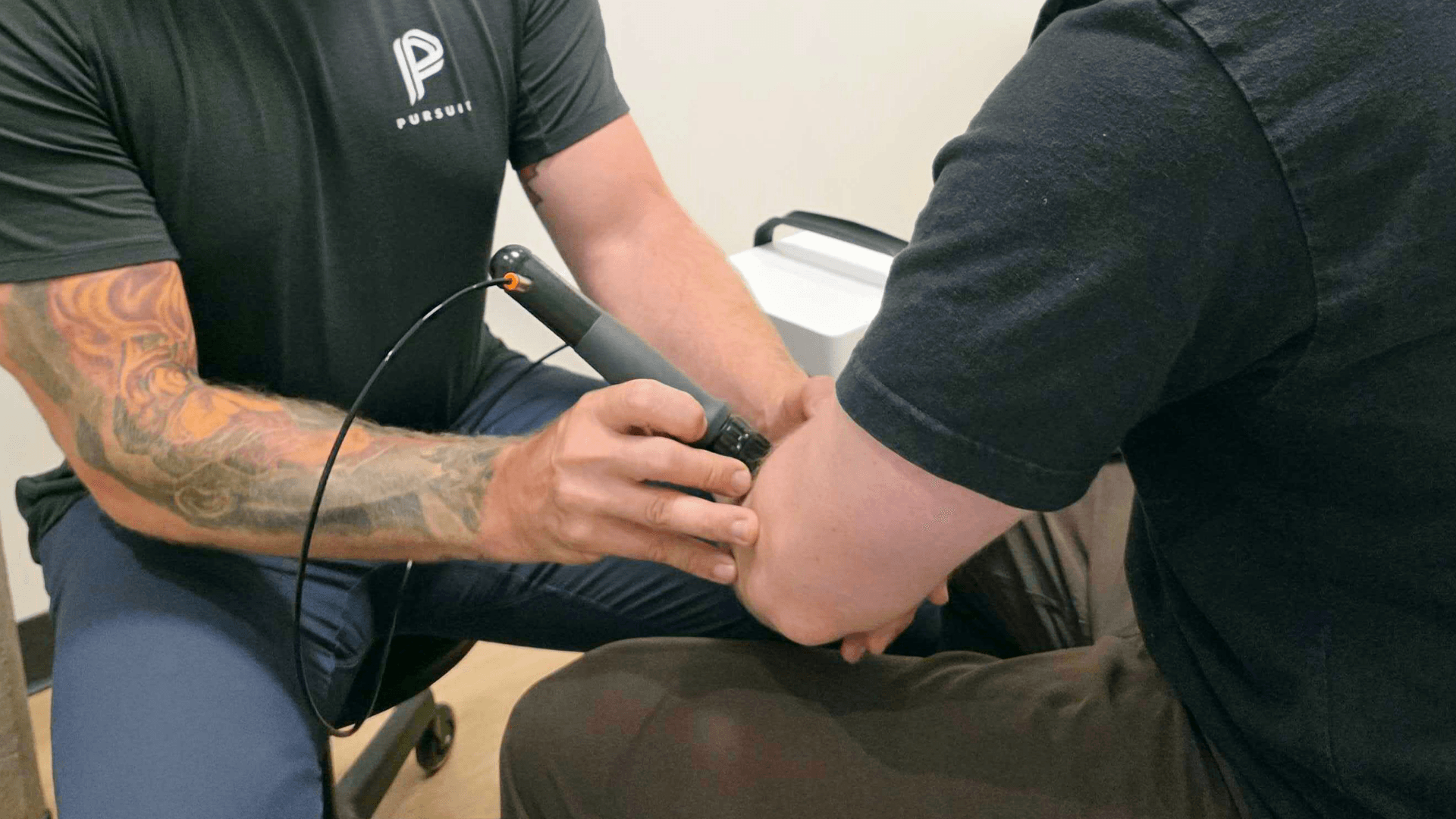
Manual therapy for TMD may include gentle joint mobilization of the TMJ (outside the mouth and, with your consent, intraoral techniques), soft tissue release of the masseter and temporalis, and treatment of the upper cervical spine. The research above supports manual therapy as a meaningful part of care — as a way to reduce pain and restore movement so you can do the active work that creates lasting change.
Exercise and motor retraining
This is where long-term results come from. Depending on your presentation, your program may include controlled opening drills in front of a mirror, coordination exercises to eliminate deviation, endurance work for the jaw muscles, and deep neck flexor training. These are precise, low-effort exercises — nothing like gym training — but they retrain how the joint moves.
Education and habit change
Understanding your pain changes your pain. We’ll cover daytime clenching awareness, tongue resting position, managing gum chewing and nail biting, sleep positioning, and the role of stress. If grinding is a major feature, we coordinate with your dentist — a night guard and physiotherapy work well together, protecting the teeth while physio restores muscle and joint function.
Pursuit Philosophy: Passive treatment alone doesn’t change how your jaw works tomorrow. Pursuit doesn’t offer passive electrotherapy — every TMD plan here is built around measured progress: we test your opening range and pain at intake, retest as we go, and adjust the plan based on real numbers, not guesswork.
Active Care vs. Passive Care: Why It Matters for Your Jaw
It’s tempting to hope jaw pain will resolve with rest, soft foods, and avoiding the problem. Sometimes mild flare-ups do settle on their own. But persistent TMD tends to behave like other persistent musculoskeletal problems: avoidance shrinks your tolerance rather than growing it. Months of careful chewing and guarded opening can leave the joint and muscles less conditioned, not more.
The evidence-supported path is the opposite: calm the system down, then gradually restore normal movement and load. Manual therapy, education, and reassurance settle the irritability; progressive exercise rebuilds capacity. That’s the active model, and it’s the model every plan at Pursuit follows.
How Physio, Chiro and Massage Therapy Work Together
The muscles of mastication respond well to skilled soft tissue work, and jaw pain rarely travels without tension in the neck, shoulders, and upper back. At Pursuit, our physiotherapists, chiropractor and registered massage therapists work from a shared model: from assessment, joint treatment, and exercise progression, to addressing the muscular component — masseter, temporalis, suboccipitals, upper trapezius — in coordinated sessions.
Because providers work in the same clinic and communicate about your plan, treatment builds in one direction instead of two providers guessing separately.
How Long Does TMD Recovery Take? Realistic Expectations
Honest answer: it depends on the type of TMD and how long it’s been present.
- Muscle-dominant jaw pain of recent onset often improves noticeably within 4–6 weeks of combined manual therapy, exercise, and habit change.
- Disc-related clicking may improve in function and comfort even if the click itself doesn’t fully disappear — a painless click in a well-moving jaw is common and not a problem to chase.
- Long-standing TMD, especially with stress and sleep factors, responds over months rather than weeks, and progress tends to be gradual and non-linear.
- Post-whiplash TMD typically recovers alongside the neck as part of an integrated plan.
What we won’t do is promise a fixed timeline. What we will do is measure your opening range, pain levels, and function at the start, retest at regular intervals, and show you your progress in numbers. If you’re not progressing, we change the plan — or help you access the right next step, including coordination with your dentist or physician when appropriate.
When to Get Your Jaw Assessed
Book an assessment if you’re experiencing:
- Jaw pain or fatigue with chewing, talking, or yawning that’s lasted more than a couple of weeks
- Clicking or popping that’s painful, or a jaw that catches or locks
- Limited mouth opening (struggling to fit two to three stacked fingers between your front teeth)
- Morning jaw tightness or temple headaches, especially with known grinding
- Jaw symptoms that appeared after a car accident — even weeks later
A red-flag note, because honesty matters: sudden severe jaw pain with chest pain, jaw swelling with fever, or an inability to close your mouth at all warrant urgent medical care rather than a physio booking.
Book a Balance Assessment at Pursuit
If your jaw has been clicking, aching, or interrupting your meals, you don’t need to wait for it to “sort itself out” — and you don’t need a doctor’s referral to be seen.
Pursuit Physiotherapy
📍 102B–740 Hillside Ave, Victoria, BC
🚗 Free 60-minute parking on site, and easily accessible by transit
📅 Book online: pursuitphysiotherapy.janeapp.com
📞 (250) 363-9707
✉️ info@pursuitphysiotherapy.ca
No referral needed — direct billing available to all major extended health insurers
References
- Herrera-Valencia A, Ruiz-Muñoz M, Martin-Martin J, Cuesta-Vargas A, González-Sánchez M. Efficacy of manual therapy in temporomandibular joint disorders and its medium- and long-term effects on pain and maximum mouth opening: a systematic review and meta-analysis. Journal of Clinical Medicine. 2020. PubMed ID: 33114236.
- Effectiveness of exercise therapy on pain relief and jaw mobility in patients with pain-related temporomandibular disorders: a systematic review. Frontiers in Oral Health. 2023. DOI: 10.3389/froh.2023.1170966.
- Conservative and Minimally Invasive Interventions for Temporomandibular Disorders: A Systematic Review and Meta-Analysis of Randomized Controlled Trials. 2025. PMC ID: PMC12516169.
- Sale H, Isberg A. Delayed temporomandibular joint pain and dysfunction induced by whiplash trauma: a controlled prospective study. Journal of the American Dental Association. 2007. PubMed ID: 17670875.
- Häggman-Henrikson B, et al. Whiplash-associated disorders and temporomandibular symptoms following motor-vehicle collisions. 2011. PubMed ID: 21206925.