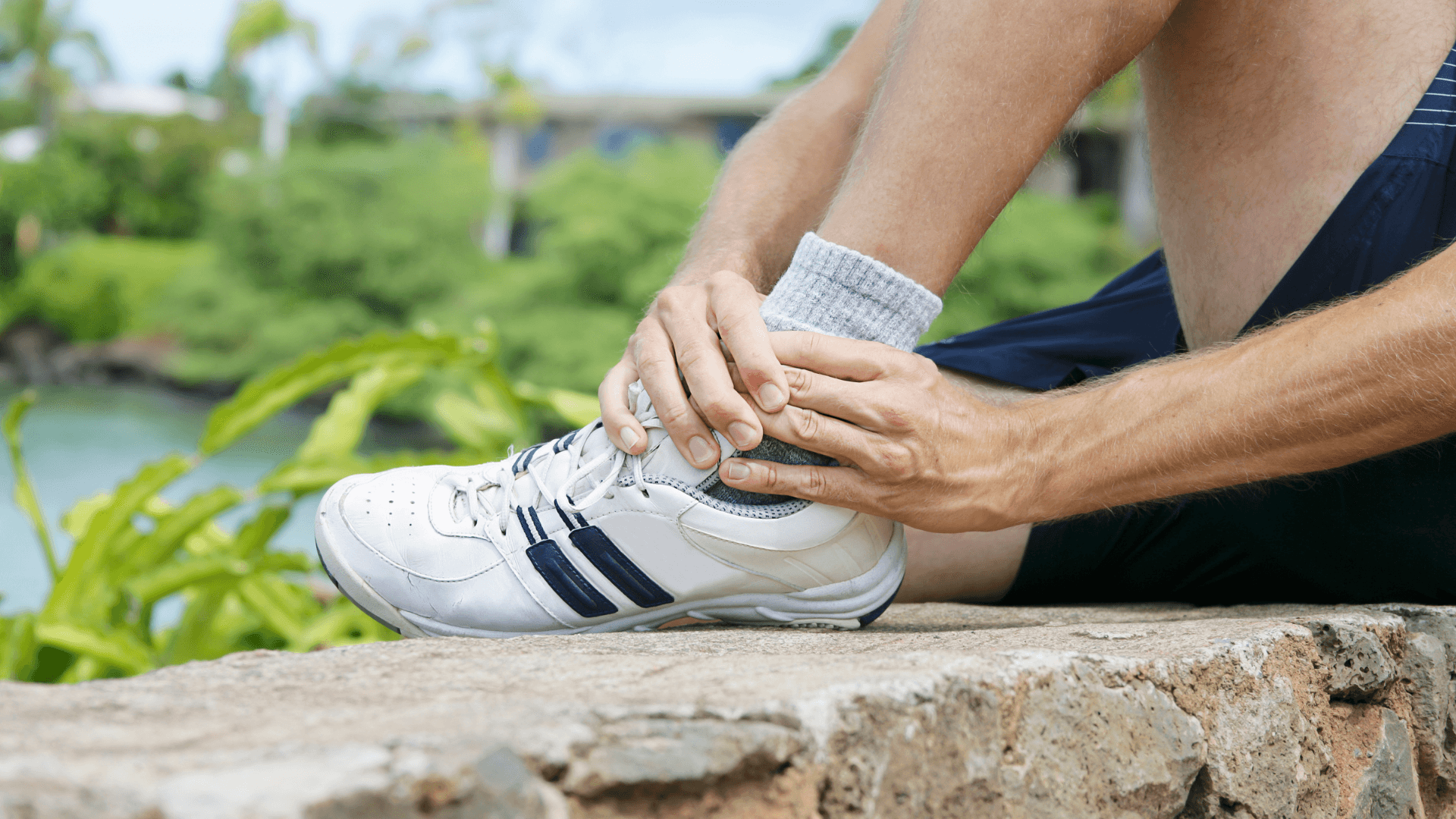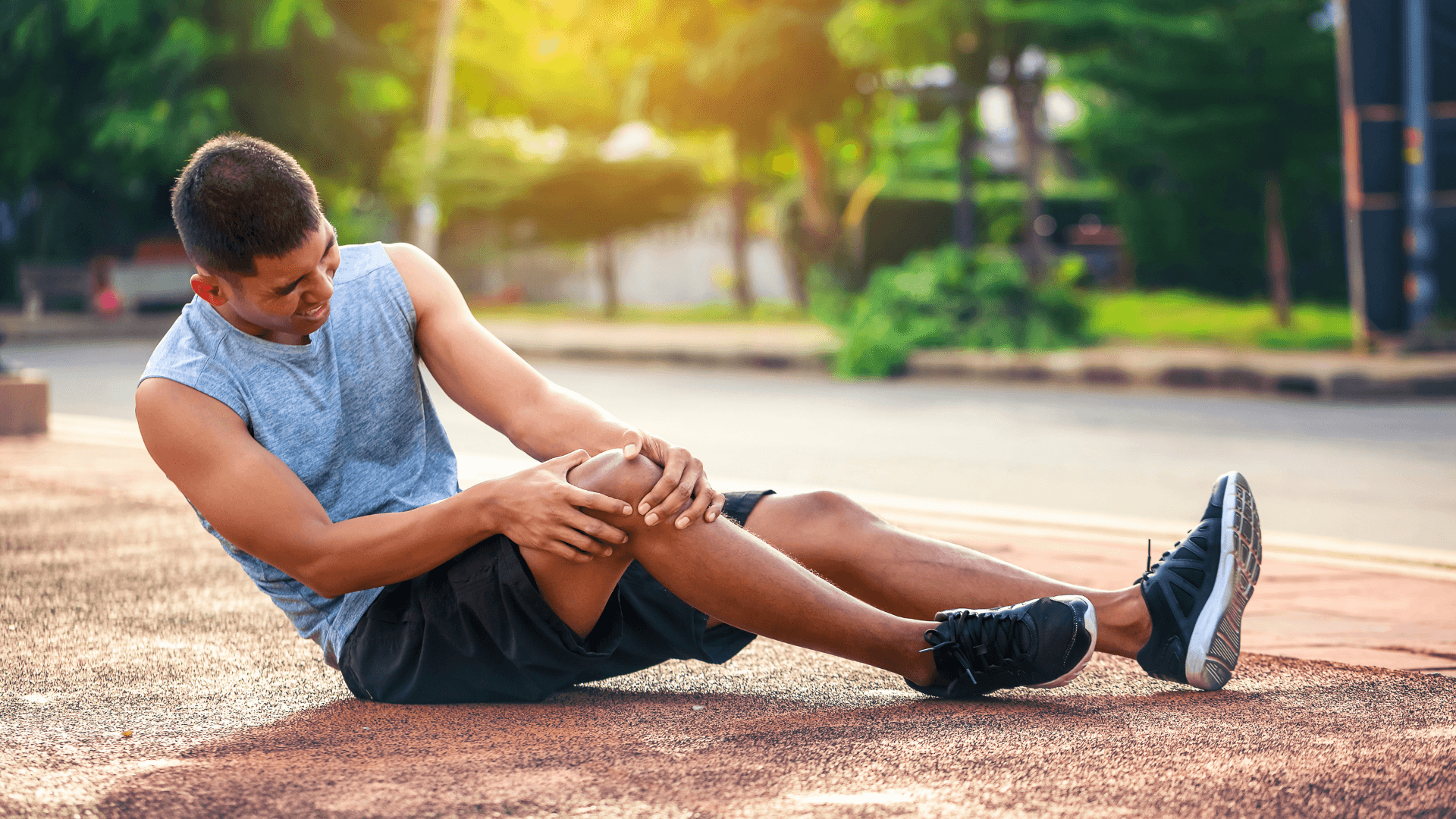
That nagging ache under your kneecap — whether it flares on the Galloping Goose, the stairs at work, or after an hour at your desk — has a name, a cause, and a clear path to recovery with runner’s knee physiotherapy in Victoria BC.
The Ache Under Your Kneecap Has a Name
You’ve probably felt it. A dull, aching pain sitting right behind or around your kneecap. It gets worse when you run, squat, go up stairs, or sit for a long stretch in the car. Sometimes it’s sharp; more often it’s a slow, grinding discomfort that makes you want to cut your run short or take the elevator instead of the stairs.
If this sounds familiar, you may be dealing with patellofemoral pain syndrome — better known as runner’s knee. And in an active city like Victoria, BC, where the running trails are scenic and the cycling culture is strong, it’s one of the most common knee complaints we see at Pursuit Physiotherapy.
The good news: runner’s knee is highly treatable. The less good news: ignoring it usually doesn’t make it go away. Let’s talk about what’s actually happening in your knee, why it’s happening, and what physiotherapy at Pursuit does about it.
What Is Runner’s Knee Physiotherapy (Patellofemoral Pain Syndrome)?
Your kneecap (patella) sits at the front of your knee and glides up and down in a groove at the base of your femur (thigh bone) as you bend and straighten your leg. For this movement to happen smoothly, the muscles around your knee and hip need to work in coordination — keeping the kneecap tracking straight down that groove.
When those muscles are weak, imbalanced, or fatigued, the kneecap can pull slightly to one side. Over time, this abnormal tracking creates friction and pressure on the cartilage underneath the kneecap. That’s what produces the pain.
Patellofemoral pain syndrome (PFPS) is not a single injury — it’s a syndrome, meaning it’s a cluster of symptoms with multiple potential contributors. Your physio’s job is to figure out *your* combination of contributing factors and build a plan around them.
Research Stat: Patellofemoral pain syndrome affects approximately 22.7% of the general population and is a leading cause of knee-related health care visits, primarily impacting young, active individuals.
Source: Vikhe CS et al., PLoS One, 2024. DOI: 10.1371/journal.pone.0312279. PMID: 39700184.
What Causes Runner’s Knee?
There’s rarely a single cause. Runner’s knee (PFPS) is typically the result of several factors compounding over time:
Muscle imbalances: Weakness in the hip abductors and external rotators is one of the most consistent findings in people with PFPS. When your hips can’t stabilise your pelvis properly, your femur internally rotates, pulling the kneecap off its ideal track.
Quadriceps weakness or asymmetry: Your quads act as the kneecap’s “reins.” If there’s a strength difference between your inner and outer quad muscles, the patella can be pulled toward the stronger side.
Training load spikes:*Runner’s knee often appears after a sudden increase in mileage, intensity, or surface change — think a new 10K training plan, or spending a week hiking the Juan de Fuca Trail after months of road running.
Foot and ankle mechanics: Overpronation (when your foot rolls inward) causes a chain reaction up the leg that changes how force is transmitted to the knee.
Prolonged sitting: The “movie-goer’s sign” — pain after long periods with the knee bent — is classic PFPS. Prolonged compression of the kneecap on the femur irritates the cartilage beneath.
Who Gets Runner’s Knee?
Runner’s knee (PFPS) is most common in runners, cyclists, and active people aged 20–45, but it also affects desk workers who sit for long periods and people returning to activity after time off. In Victoria, it’s particularly common in:
– Runners training for the Royal Victoria Marathon or the TC10K
– Trail runners on Mount Doug, Mount Tolmie, or the Lochside Regional Trail
– Cyclists and triathletes
– People returning from sedentary periods who ramp up activity too quickly
Women are somewhat more susceptible than men due to differences in hip and pelvis anatomy, but PFPS is genuinely common across all genders and activity levels.
Why Passive Treatment Alone Won’t Fix Your Runner’s Knee
Here’s something worth understanding before you decide how to approach your knee: runner’s knee is a load management and movement quality problem. That means it won’t be resolved by treatments that don’t address those root issues.
Rest helps in the short term — it reduces the irritation on the kneecap’s cartilage. But rest alone doesn’t strengthen the muscles that caused the problem in the first place. When you go back to running or cycling without addressing the underlying causes, the pain comes back. This is why so many people end up in a frustrating cycle of rest, return, pain, rest.
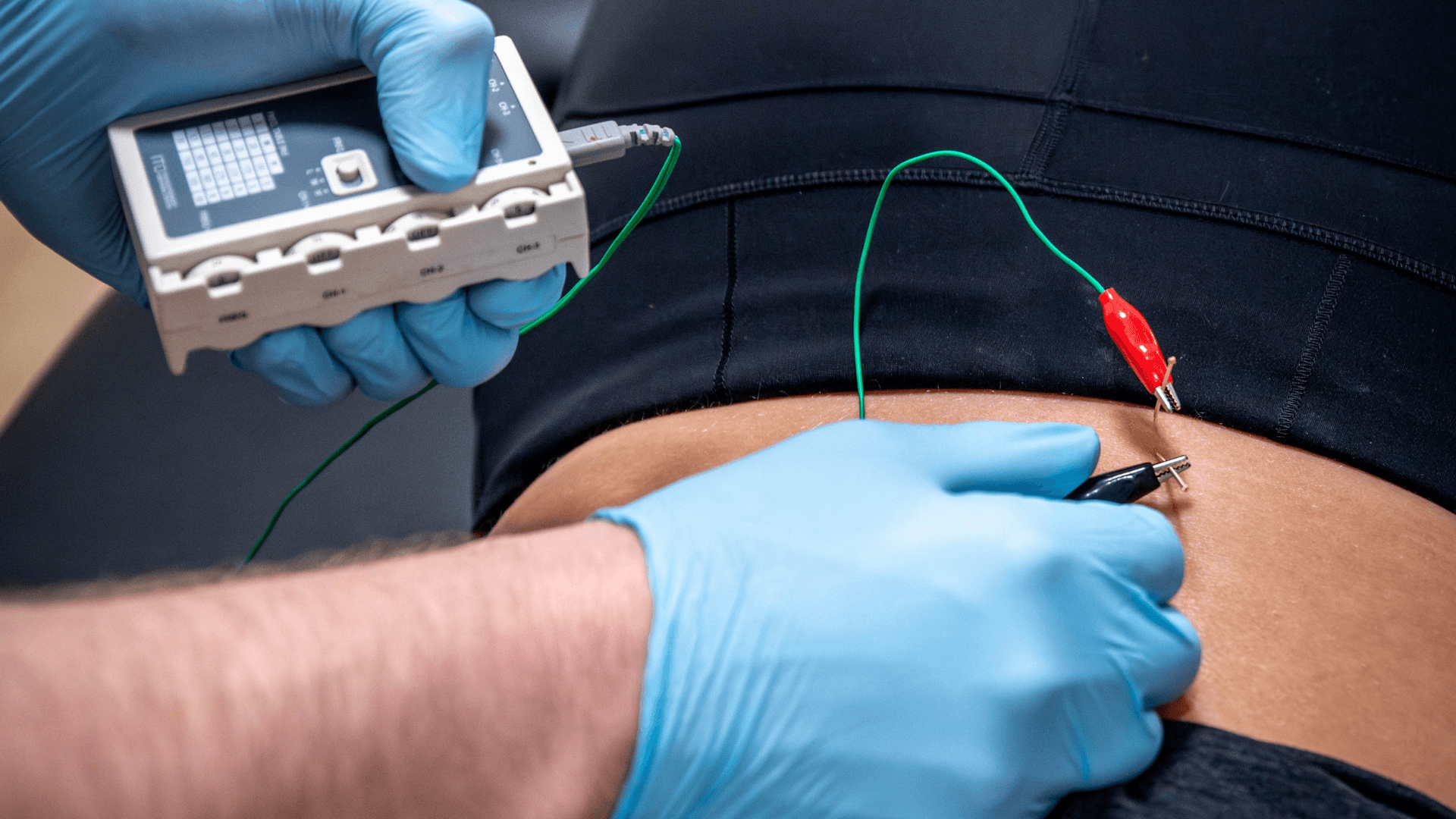
At Pursuit, we don’t use ultrasound, IFC, TENS, or other passive electrotherapy equipment. We made this decision deliberately, based on the evidence: these modalities don’t address the neuromuscular deficits and movement patterns that drive PFPS. What does work — consistently, in the research — is targeted active exercise.
Pursuit Philosophy: Physio that fixes you while you’re in the clinic isn’t really fixing you. Our goal is to address the mechanics driving your knee pain — so you leave with a plan that works outside our walls, on the Galloping Goose or the squash court or the gym floor.
What the Research Says About Physiotherapy for Runner’s Knee (PFPS)
The evidence on runner’s knee PFPS treatment is clear: exercise therapy — especially exercise that targets both the hip and the knee — produces significantly better outcomes than knee-focused exercise alone.
A 2025 systematic review and meta-analysis published in Musculoskeletal Care analysed six randomised controlled trials involving 241 patients with PFPS. The findings showed that combined hip and knee strengthening produced significantly greater improvement in pain and functional activity compared to knee strengthening alone. No significant difference in muscle strength outcomes was observed between groups — but the pain and function improvements from the combined approach were meaningful.
Source: Halabi et al., Musculoskeletal Care, 2025. DOI: 10.1002/msc.70059. PMID: 39934098.
This confirms what experienced physiotherapists have observed clinically for years: treating PFPS effectively means treating the whole kinetic chain — hip, knee, and often foot and ankle — not just chasing the pain at the kneecap.
How Physiotherapy and RMT Work Together for Knee Pain
At Pursuit, our physiotherapists and registered massage therapists (RMTs) work from a shared model. For runner’s knee, the combination is particularly effective.
What the physiotherapist does: Conducts a thorough assessment of your knee tracking, hip strength, foot mechanics, and movement patterns. Designs and progresses your exercise rehabilitation plan. Identifies if there’s a biomechanical issue at the foot or hip that needs to be addressed. Uses hands-on joint mobilisation and soft tissue techniques where appropriate.
What the RMT does: Addresses the protective muscle tension that builds up around an irritated knee. Tight iliotibial bands, overworked quadriceps, and inhibited glutes all respond well to targeted soft tissue work. When muscle tone is reduced, the joint can move more freely and the patient can access the full range of movement needed for rehab exercises.
The sequencing matters: massage before exercise can prepare the tissue, making motor pattern retraining more effective. Think of it like warming up a clay before shaping it.
The Integration Principle: Massage reduces the inhibitory influence of protective muscle guarding — which means your physio’s movement retraining lands on more receptive tissue. This isn’t two separate treatments; it’s one coordinated intervention.
The Pursuit Approach to Knee Pain
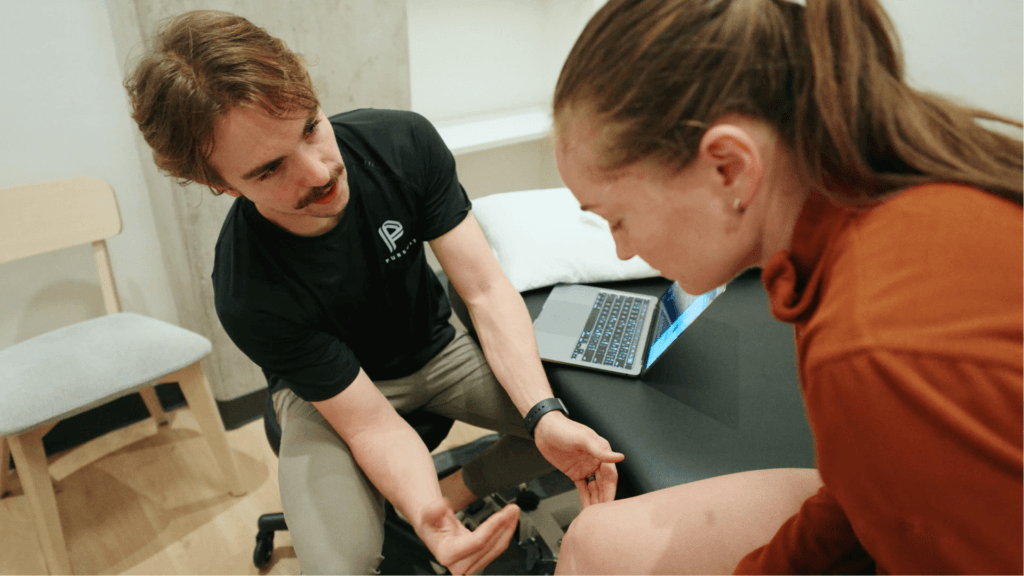
Every person who comes to Pursuit with knee pain gets a one-on-one assessment — no reception area exercises, no shared appointment slots. Your physio takes the time to understand not just where it hurts, but why it hurts and what you’re working toward.
Assessment: We measure hip strength, quad strength, single-leg control, and movement patterns. We look at how you squat, step, and run if relevant. We note where the asymmetries are.
Goal-setting: A Victoria runner who wants to complete the Royal Vic Marathon in October has different goals than someone who just wants to walk the Waterfront Trail without pain. Both are valid. Both shape the plan.
Active rehabilitation: Your program is built around the specific deficits we found in your assessment — not a generic knee handout. Hip strengthening, quad loading, proprioceptive training, and progressive return to activity are all tailored to you.
Retesting: We measure the same things at regular checkpoints. When your hip strength improves, we show you. When your single-leg squat looks better, we confirm it. Progress is visible, not assumed.
Long-term: Our goal isn’t just to get your knee comfortable enough to function. It’s to build you back to full capacity — running stronger, moving better, and with the resilience to maintain it.
What to Expect from Recovery
Recovery timelines for PFPS vary. Mild cases with consistent rehab can see significant improvement in 4–8 weeks. More established cases or those with multiple contributing factors may take 3–4 months of progressive loading before full return to sport.
What makes the biggest difference: consistency with your home exercise program between appointments, gradual progression of load (not rushing back to full mileage), and patience with the process when things don’t move in a straight line.
We won’t promise you a specific timeline. What we will promise: a thorough assessment, honest communication about where you are in the process, an evidence-based plan, and a team that stays engaged with your progress.
Recovery from PFPS is not just about getting your knee comfortable enough to manage. It’s about getting back to the runs, the hikes, the sports, and the activities that matter to you — and building enough strength and resilience that you don’t have to keep coming back to us.
Book at Pursuit — No Referral Needed
If your knee has been stopping you from doing what you love, you don’t need a doctor’s referral to start physiotherapy. You can book directly.
Pursuit Physiotherapy
102B–740 Hillside Ave, Victoria, BC
Free 60-minute parking available. Easily accessible by transit.
Direct billing available to all major extended health insurers.
Book online: pursuitphysiotherapy.janeapp.com
Phone: (250) 363-9707
Email: info@pursuitphysiotherapy.ca
References
- Vikhe CS, Ramteke SU, Hullumani S. Effect of physiotherapy interventions on pain management, function and quality of life in patellofemoral pain syndrome: A systematic review protocol. PLoS One. 2024;19(12):e0312279. DOI: 10.1371/journal.pone.0312279. PMID: 39700184.
- Halabi MH, et al. The efficacy of hip and knee muscles strengthening versus knee muscle strengthening alone in managing patellofemoral pain syndrome: A systematic review and meta-analysis. Musculoskeletal Care. 2025;23:e70059. DOI: 10.1002/msc.70059. PMID: 39934098.
- Pereira PM, Baptista JS, Conceição F, et al. Patellofemoral Pain Syndrome Risk Associated with Squats: A Systematic Review. Int J Environ Res Public Health. 2022;19(15):9241. DOI: 10.3390/ijerph19159241. PMID: 35954598.