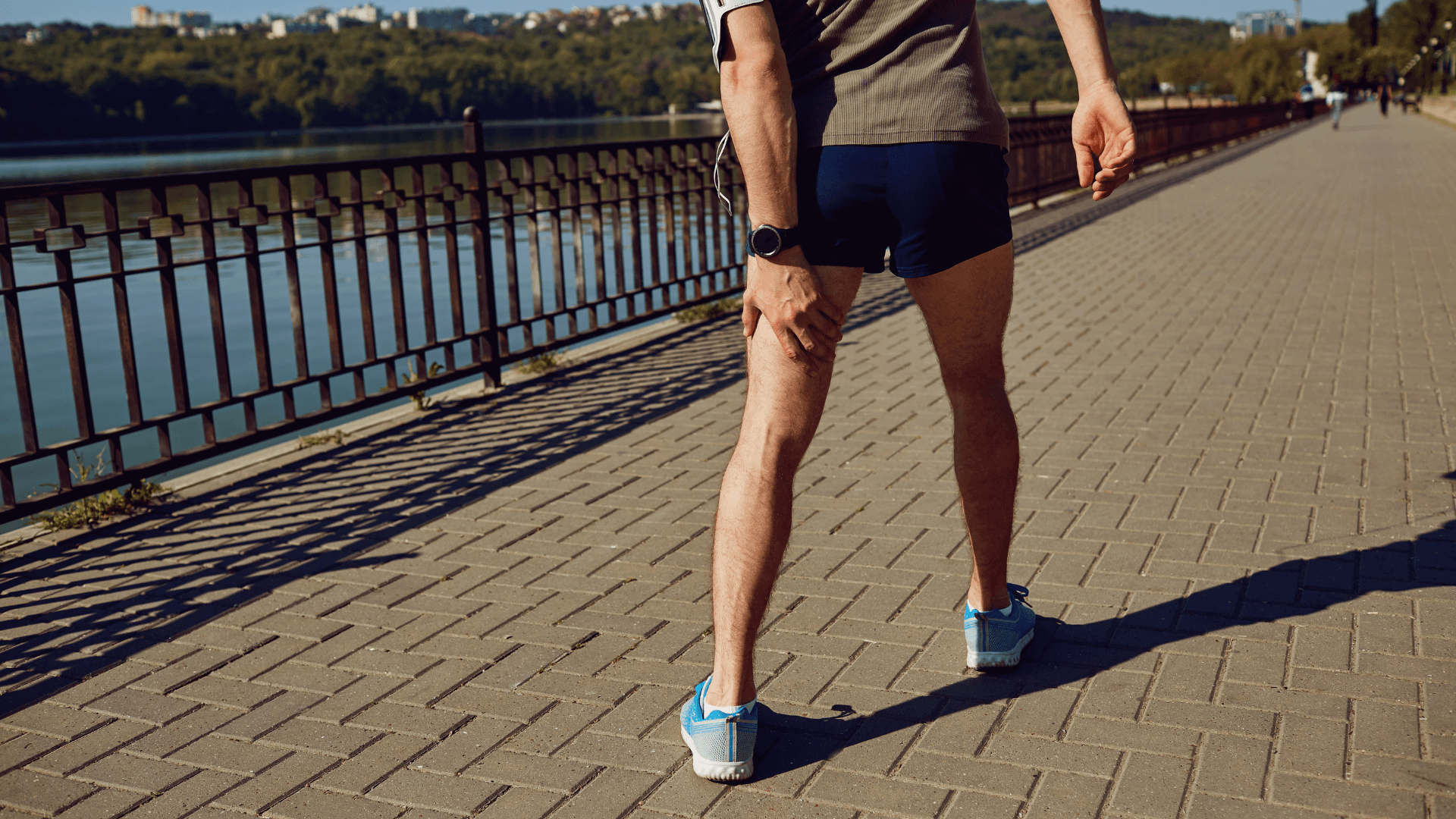
IT band pain in runners usually starts somewhere around the 4 km mark. Or maybe it’s 8 km. You’re running the Galloping Goose on a Tuesday evening in Victoria, feeling strong, when a familiar tightness starts building just above the outside of your knee. By 9 km it’s a sharp, stabbing sensation that forces you to slow down. By the next morning, you’re hobbling down stairs and wondering if the TC10K — or the Royal Vic — is actually going to happen for you this year.
IT band syndrome — iliotibial band syndrome, or ITBS — is one of the most common overuse injuries in runners. It accounts for approximately 10% of all running-related injuries and stands as the leading cause of lateral knee pain in this population.
Here’s the frustrating part: most runners manage IT band pain by cutting mileage, foam rolling, and stretching — and while those strategies may provide temporary relief, they rarely address the underlying reasons the injury happened in the first place. Six weeks later, the moment mileage goes back up, the pain returns.
This article is for Victoria-area runners who want to understand what is actually happening at their lateral knee, what the current research says about treating it, and how evidence-based physiotherapy and massage therapy can change the trajectory of recovery — not just manage symptoms, but fix the root cause.
What the IT Band Actually Is (and What It Isn’t)
The iliotibial band (ITB) is not a muscle. It’s a thick band of connective tissue — fascia — running along the outside of your thigh from the hip to just below the knee. More precisely, it is the distal fascial continuation of three muscles: the tensor fascia lata (TFL), the gluteus medius, and the gluteus maximus. These muscles pull on the ITB from above, while the ITB transmits that force downward along the lateral thigh to a bony attachment just below the outer knee. Because of its important role in stabilizing the hip and knee during repetitive movement, IT band pain in runners is one of the most common overuse injuries seen in physiotherapy.
Because it’s dense connective tissue, the ITB has very limited extensibility — it cannot be meaningfully stretched the way a muscle can. This is one of the most important and most misunderstood facts about IT band syndrome. Your foam roller is not lengthening the ITB itself, even if it temporarily changes how the surrounding tissues feel.
The Zone of Pain: Why That Specific Spot, Every Single Run
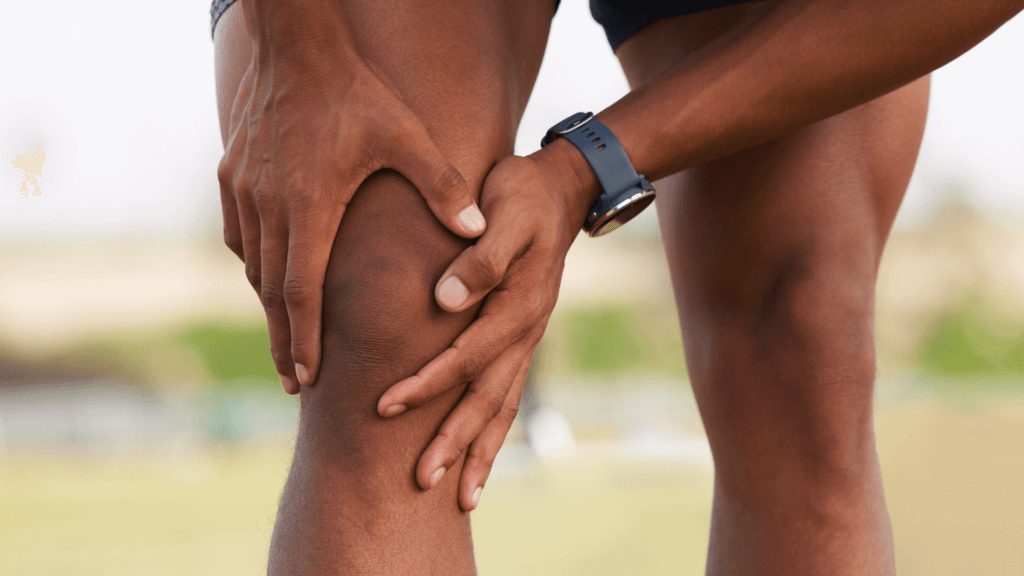
Research has identified the precise mechanical event that causes ITBS pain. As your knee bends to approximately 30° of flexion during running — which occurs at the moment your foot contacts the ground — the ITB is directly compressed against the lateral femoral epicondyle, the bony prominence on the outside of your knee.
This is the “impingement zone.” At this angle, the ITB is pulled taut by the TFL and gluteal muscles and pressed against the epicondyle with every stride. Beneath the band at this location sits a richly innervated fat pad — a highly sensitive structure that, when repeatedly compressed across thousands of footstrikes, becomes inflamed and painful.
This explains something every runner with ITBS has noticed: the pain appears at roughly the same point in the run, at the same location on the outside of the knee, every time.
Why IT Band Pain in runners is common in Victoria
ITBS rarely develops in isolation. Almost universally, there is a contributing story — a training decision, a biomechanical pattern, or a terrain factor that gradually loaded the IT band past what it could tolerate.
Training errors are the most common trigger
A rapid spike in weekly mileage — especially when training for a goal race — exceeds the tissue’s capacity to adapt. Victoria runners building toward the Royal Vic Marathon or ramping up for the TC10K are particularly susceptible.
Victoria’s terrain changes the equation
Downhill running is particularly provocative for ITBS. The roads around Mount Doug, the switchbacks at Thetis Lake, and long downhills in Beacon Hill Park can accelerate ITBS development in runners who aren’t prepared for gradient-specific load.
Hip muscle dysfunction is consistently implicated
When the hip abductors — particularly the gluteus medius — are under-functioning, the pelvis drops during each stance phase. This increases the tension through the ITB and the compressive force at the lateral knee.
Why Rest Alone Won’t Fix It
If you’ve had IT band pain before, you probably already know this pattern. You cut your mileage. The pain settles. You go back to running. Within a few kilometres, the familiar tightness creeps back.
Rest removes the provocative load, which allows the local inflammation to settle and the pain signals to quiet. But it does nothing to address the hip weakness, the movement patterns, or the training habits that caused the problem.
Active Therapy vs. Passive Therapy: A Distinction That Changes Your Outcome
Passive modalities like therapeutic ultrasound, interferential current (IFC), TENS, and laser therapy may reduce pain signals temporarily. But they do not build the hip strength needed to reduce IT band tension. They do not correct the running mechanics that drove the injury.
A 2024 systematic review of 13 studies and 201 runners found that combined active strategies — particularly hip abductor strengthening integrated with manual therapy — consistently outperformed single passive interventions across all measured outcomes.
Pursuit Physiotherapy does not use ultrasound, IFC, TENS, or passive electrotherapy. This is a deliberate, evidence-informed decision.
What active, evidence-based physiotherapy for IT Band pain in runners actually looks like
– Hip abductor strengthening
– Movement pattern retraining
– Manual therapy
– Dry needling / IMS
– Running assessment
– Load management and graduated return-to-running
What the Evidence Actually Recommends
The 2024 systematic review found that combined treatment approaches produced approximately 71% pain reduction versus 61% with single interventions. Hip abductor strengthening appeared as a key active component in 6 of 8 combined treatment studies.
On dry needling: A 2024 clinical trial found that three sessions of dry needling combined with stretching produced statistically greater improvements in pain compared to stretching alone. In a separate RCT, dry needling also demonstrated superiority over shockwave therapy in pain reduction at 4-week follow-up.
On gait modification: A 2025 systematic review found that increasing running cadence by 5–10% consistently reduced peak impact forces at the knee by approximately 20%.
The Physiotherapy and Massage Therapy Partnership for IT Band pain in runners Recovery
Your physiotherapist leads with a thorough assessment: hip strength testing, running mechanics evaluation, range of motion, single-leg movement quality. They design your rehabilitation programme — progressive hip strengthening, movement retraining, manual therapy, dry needling, and a graduated return-to-running plan.
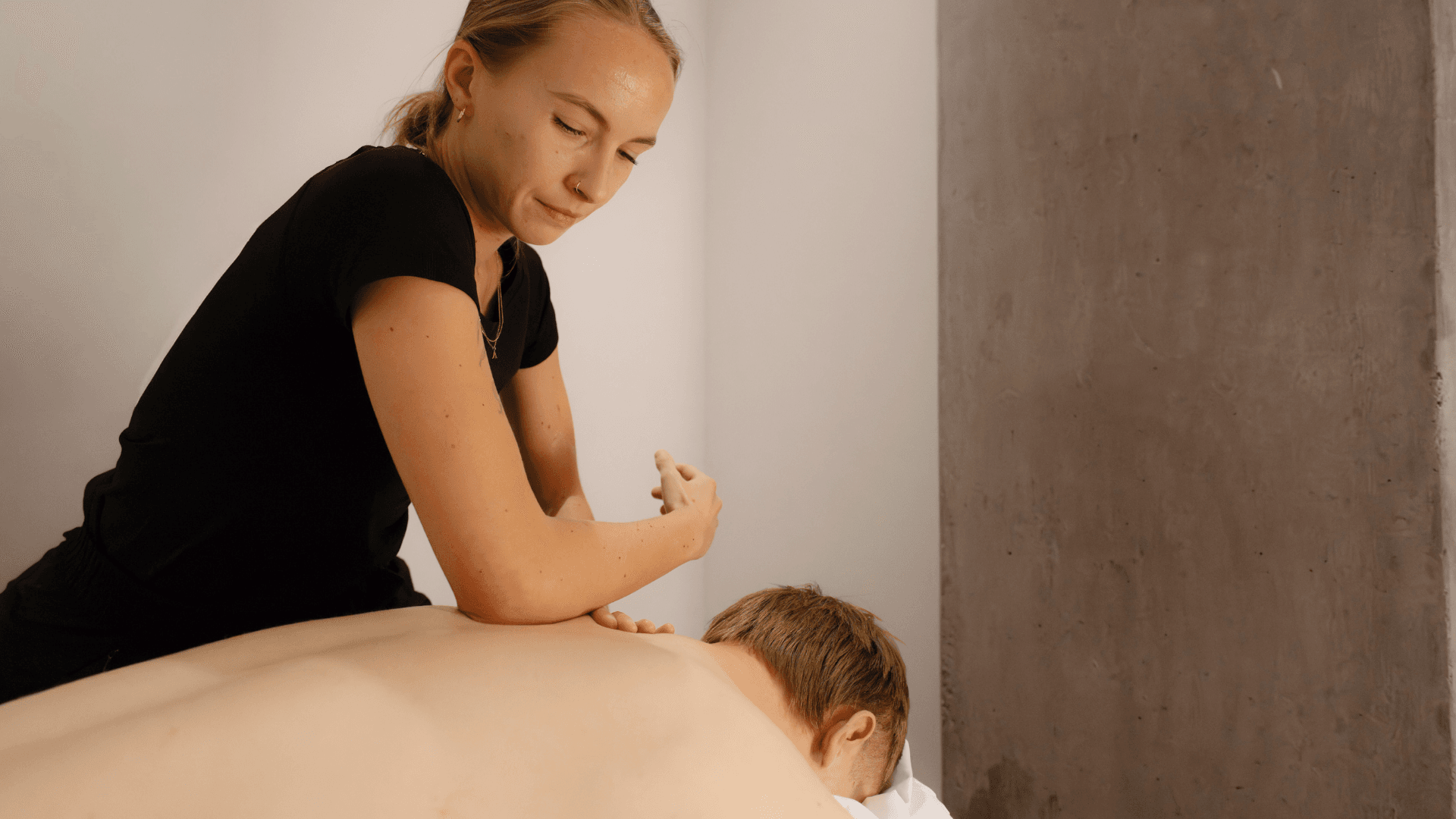
Your RMT addresses the tissue dimensions of ITBS that exercise alone cannot fully reach. The TFL, lateral quadriceps, and glute complex often develop significant tone and protective guarding. Skilled massage therapy reduces this hypertonicity, improves circulation, and reduces peripheral pain signals.
The Integration Principle
Think of RMT sessions as preparing the tissue and the nervous system — reducing the tone and guarding that make lateral hip exercise painful — and physiotherapy as building the strength and mechanics that stop the IT band pain from coming back.*
The Pursuit Physiotherapy Approach to IT Band Syndrome in Victoria
Every runner who comes to Pursuit with IT band pain gets one-on-one time with a physiotherapist — a proper assessment, a clear clinical picture, and a plan that is specific to you. We also have a fully equipped gym on-site: squat rack, full dumbbell and kettlebell set, Concept2 rower, Echo Bike.
Realistic Expectations: What IT Band Recovery Actually Looks Like
Most runners with ITBS who engage in conservative active rehabilitation experience meaningful clinical improvement within 6–8 weeks, with high rates of return to full activity at 6 months.
What Pursuit will guarantee: a thorough assessment on day one, an honest and specific picture of what’s driving your injury, a plan built on the best available evidence, and a team that tracks your progress with objective measures.
Frequently Asked Questions about IT Band Recovery
Q: Can I keep running while treating IT band syndrome?
A: In most cases, yes — though typically not at the same volume or intensity that triggered the injury.
Q: Is IT band syndrome the same as runner’s knee?
A: No. Runner’s knee most commonly refers to patellofemoral pain syndrome — pain around or behind the kneecap. ITBS is lateral knee pain at the outside of the joint.
Q: How many physiotherapy sessions will I need?
A: A mild, acute case may improve substantially within 4–6 sessions. More chronic or recurrent ITBS typically requires a longer programme.
Q: Does foam rolling actually help IT band syndrome?*
A: Foam rolling may help manage pain in the short term. The ITB itself cannot be meaningfully stretched. As part of a broader active programme it has a supporting role, but it is not sufficient as the primary treatment.
Q: Will IT band syndrome come back after treatment?
A: It can — particularly if the underlying causes are not addressed. Runners who complete a thorough programme have significantly lower recurrence rates.
References
- Sanchez-Alvarado A et al. Effects of conservative treatment strategies for ITBS on pain and function in runners. *Frontiers in Sports and Active Living*. 2024. DOI: 10.3389/fspor.2024.1386456. PMID: 39247485.
- Hadeed A, Tapscott DC. Iliotibial Band Friction Syndrome. StatPearls. Updated May 2023.
- Chen S et al. Effects of Running Speeds and Exhaustion on Iliotibial Band Strain. *Bioengineering*. 2023. PMID: 37106604.
- Marais JV et al. Risk factors associated with ITBS in 76,654 race entrants. *Phys Sportsmed*. 2024. PMID: 38618688.
- Charles D, Rodgers C. Literature review on development of ITBS in runners. *IJSPT*. 2020. PMID: 32566382.
- Singh A et al. Effectiveness of dry needling on pain & disability in athletes with ITB tightness. *JBMT*. 2024. PMID: 39593624.
- McKay J et al. ITBS rehabilitation in female runners: a pilot randomized study. *JOSR*. 2020. PMID: 32448384.
- Maghroori R et al. Shockwave Therapy vs Dry Needling for ITBS. *Galen Medical Journal*. 2021. PMID: 35855103.
- Bhakaney PR et al. Immediate Effect of Percussive Massage Therapy on ITB Tightness. *Cureus*. 2025. PMID: 39944460.
- Figueiredo I et al. Influence of Running Cadence on Biomechanics. *Cureus*. 2025. PMID: 40964543.