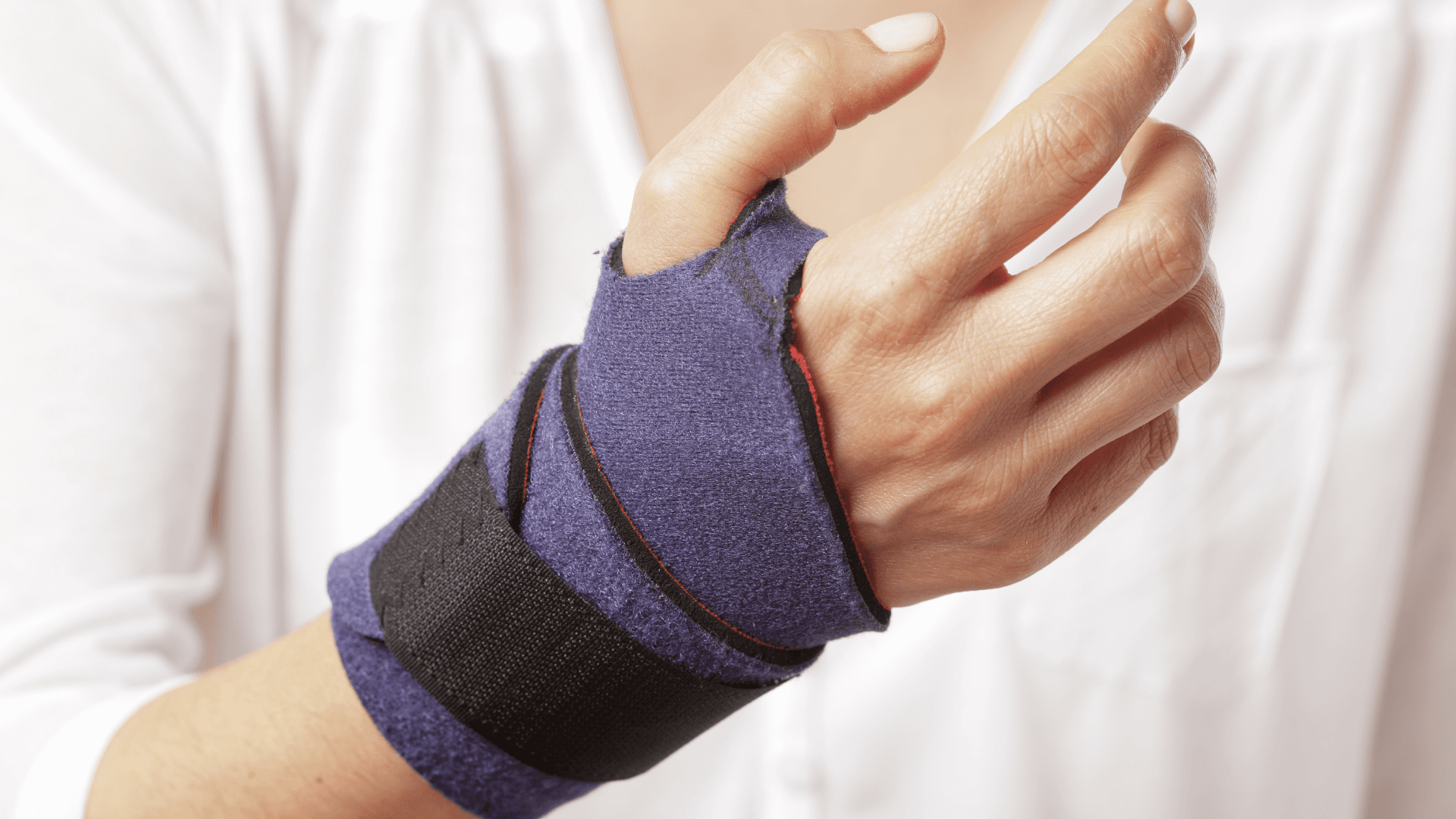
Waking up with numb, tingling hands — or shaking them out at your desk in the middle of the workday — is one of the most common nerve complaints we see at our Victoria, BC clinic. Here’s what carpal tunnel syndrome actually is, and why the evidence says physiotherapy is a great carpal tunnel treatment before surgery.
When Your Hands Start Waking You Up at Night
It often starts at 3 a.m. You wake up with your hand numb and buzzing — thumb, index, and middle fingers tingling like they’ve fallen asleep — and you shake it out over the edge of the bed until the feeling comes back.
Then it starts showing up during the day. Holding your phone. Gripping the steering wheel on the Pat Bay Highway. Typing through the afternoon at work. For the nurses and healthcare workers we treat at Pursuit Physiotherapy here in Victoria, it flares with charting, lifting, and repetitive patient care tasks. For tradespeople, it’s the drill and the torque wrench. For office workers, it’s the mouse hand.
This is the classic picture of carpal tunnel syndrome (CTS) — the most common nerve entrapment in the body. And if you’ve been told, or assumed, that surgery is the inevitable endpoint, the research has genuinely encouraging news: for many people, structured conservative care performs comparably to surgery — without the scalpel, the recovery time off work, or the surgical risk.
Let’s look at what’s actually going on in your wrist, and what the evidence says about fixing it.
What Is Carpal Tunnel Syndrome?
The carpal tunnel is a narrow passageway on the palm side of your wrist, formed by small bones on three sides and a thick ligament across the top. Through this tunnel run nine tendons and one very important structure: the median nerve, which supplies sensation to your thumb, index, middle, and half of your ring finger, and powers some of the muscles at the base of your thumb.
The tunnel doesn’t stretch. So when pressure inside it rises — from tendon irritation and swelling, fluid changes, sustained wrist postures, or repetitive gripping — the median nerve gets compressed. A compressed nerve is an unhappy nerve, and it tells you so with:
- Numbness and tingling in the thumb, index, and middle fingers (classically sparing the pinky)
- Symptoms that wake you at night or appear on waking
Aching or burning in the wrist and hand, sometimes radiating up the forearm - Weakness with gripping or pinching — dropping keys, fumbling jar lids
- In later stages, visible flattening of the muscle pad at the base of the thumb
That last one matters. Persistent, constant numbness and visible muscle wasting are signs of more advanced nerve compression — and a scenario where surgical consultation genuinely belongs on the table. Part of an honest assessment is telling you which category you’re in.
What the Research Says About Carpal Tunnel Treatment
For years, the assumption was simple: mild cases get a splint, everyone else gets surgery. Then a Spanish research group ran a rigorous head-to-head trial — and the results reshaped how clinicians think about CTS care.
In a randomized clinical trial of 120 women with carpal tunnel syndrome, participants received either surgery or a course of manual physical therapy focused on the neck and the median nerve pathway. The physiotherapy group improved faster — showing better hand function and grip outcomes at one month — and at six and twelve months, both groups had improved to a similar degree.
Research Stat: In a randomized trial of 120 women with carpal tunnel syndrome, manual therapy produced greater improvements in function and pinch-grip force at one month than surgery, with similar outcomes between groups at 6 and 12 months.
Source: Fernández-de-las-Peñas et al., The Journal of Pain, 2015. PMID: 26281946.
Fair question: does the benefit last? The same research group followed participants for four years. The answer: outcomes remained comparable between the physiotherapy and surgery groups at long-term follow-up.
Source: Fernández-de-las-Peñas et al., Physical Therapy, 2020. DOI: 10.1093/ptj/pzaa150.
And when researchers analyzed the economics, manual therapy came out as the more cost-effective first-line strategy compared with surgery.
Source: Fernández-de-las-Peñas et al., Journal of Orthopaedic & Sports Physical Therapy, 2019. DOI: 10.2519/jospt.2019.8483.
Honest caveats, because that’s how we operate: these trials studied women with mostly mild-to-moderate CTS, treated by experienced manual therapists using a specific protocol. Severe cases with constant numbness or muscle wasting were not the population studied, and surgery remains an effective, well-supported option — particularly for advanced compression. The takeaway isn’t “never surgery.” It’s that for a large group of people with CTS, a properly structured course of conservative care is a legitimate, evidence-backed first move.
More broadly, a 2025 systematic review and network meta-analysis in Archives of Physical Medicine and Rehabilitation mapped the landscape of conservative CTS treatments — from splinting to manual therapy to injection — reinforcing that several non-surgical options meaningfully improve symptoms and function in mild-to-moderate cases.
Source: Conservative Treatments of Carpal Tunnel Syndrome: A Systematic Review and Network Meta-analysis, Archives of Physical Medicine and Rehabilitation, 2025. DOI: 10.1016/j.apmr.2025.04.002.
Why the Neck Is Part of the Wrist Story
One detail from that research deserves a closer look: the successful physiotherapy protocol didn’t just treat the wrist. It treated the entire path of the median nerve — from the neck, through the shoulder and forearm, down to the carpal tunnel.
Your median nerve starts as nerve roots in your cervical spine. Along its route to your hand, it passes several points where tension or compression can add up. Clinicians sometimes compare it to a garden hose: a single hard kink is obvious, but several partial kinks along the length can reduce flow just as much. A nerve already irritated at the neck or shoulder has less tolerance for pressure at the wrist.
This is why a wrist-only approach — a splint and nothing else — often underdelivers, and why assessment at Pursuit looks well beyond where the tingling is.
We treat the person attached to the wrist. Your symptoms live in your hand; the contributing factors often live in your neck posture, your shoulder mechanics, your workload, and your sleep position. The plan has to cover all of it.
Active vs. Passive Care: Where Pursuit Stands
You may have seen carpal tunnel treatments built around machines — therapeutic ultrasound, TENS, laser. You won’t find those at Pursuit. That’s a deliberate, evidence-based choice, not a missing service: our model is built on the interventions with the strongest and most durable evidence — skilled hands-on care, nerve and tendon mobility work, progressive strengthening, and modification of the loads that created the problem.
Passive tools do exist in our CTS care — a night splint is technically passive, and it has legitimate evidence for settling night symptoms in the early phase. The difference is that passive tools support the plan; they aren’t the plan.
Active, hands-on care for CTS at Pursuit typically includes:
- Manual therapy along the median nerve pathway — neck, shoulder, forearm, and carpal mobilization, modelled on the protocols used in the trials above
- Nerve gliding (“neurodynamic”) exercises — controlled movements that help the median nerve slide freely through its path
- Tendon gliding and progressive grip strengthening — restoring capacity, not just calming symptoms
- Dry needling / IMS where appropriate — for stubborn muscular contributors in the forearm and shoulder girdle
- Workload and ergonomic problem-solving — practical changes to the postures and tasks that keep pressure on the tunnel
- Night splint guidance — when and how to use one so it helps rather than becomes a crutch
How Physio and RMT Work Together on Carpal Tunnel
CTS responds well to Pursuit’s integrated model, because the median nerve’s journey passes through a lot of muscle.
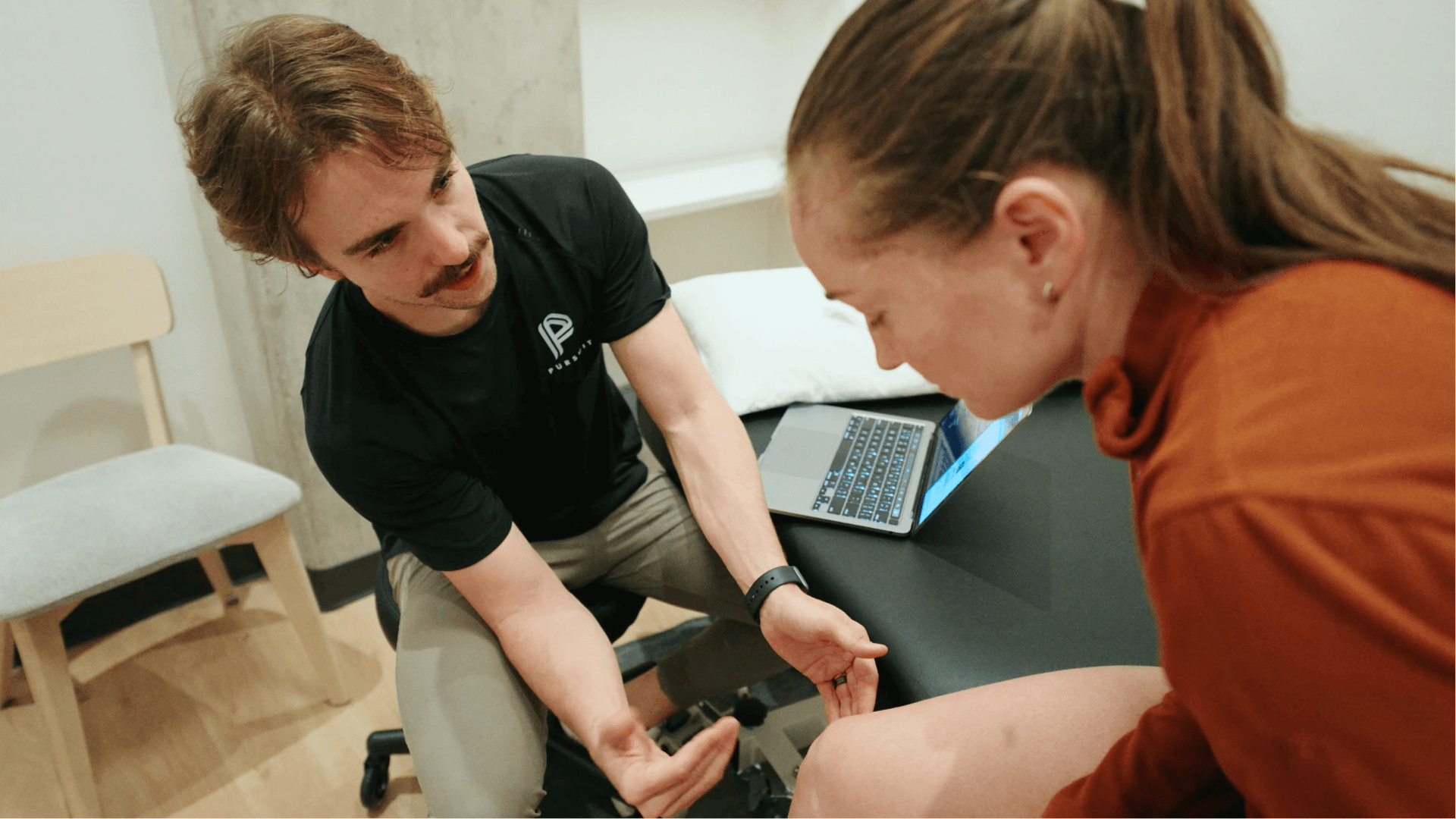
Your physiotherapist leads assessment and treatment: confirming the diagnosis (and ruling out look-alikes such as cervical radiculopathy, which can mimic CTS), grading severity, applying the manual therapy and neurodynamic program, and progressing your strengthening and work-modification plan.
Your RMT addresses the soft-tissue environment along the nerve’s route — releasing protective tone in the forearm flexors, pecs, and scalenes, improving circulation, and reducing the background muscle guarding that keeps the nerve irritable. That creates a neurological window where gliding exercises and strengthening simply work better.
The physio restores how the nerve moves and what the arm can do; the RMT improves the environment the nerve moves through. One plan, two skill sets, sequenced deliberately.
Combined, multimodal conservative care is consistent with the approach validated in the clinical trials — which paired hands-on therapy across the full nerve pathway with home exercise.
Source: Fernández-de-las-Peñas et al., The Journal of Pain, 2015. PMID: 26281946.
The Pursuit Approach to Carpal Tunnel Treatment
Here’s what your carpal tunnel treatment actually looks like at our Hillside Ave clinic, following the Pursuit Process:
Define your goal. Sleeping through the night. Finishing a nursing shift without shaking your hands out. Getting back on the tools pain-free. We anchor the plan to your version of “fixed.”
Measure what matters. Baseline grip and pinch strength, symptom severity and function scores, nerve tension testing, and provocation tests — objective numbers we can retest, not just “how does it feel this week?”
Personalized pain relief. Early-phase manual therapy, night-symptom management, and splint guidance to settle the nerve while we address the causes.
Tailored programming. Your nerve gliding, strengthening, and ergonomic plan is built around your job demands and daily patterns — a charting-heavy nurse at the Royal Jubilee and a carpenter get different programs.
Retest metrics. Grip strength climbing, night waking decreasing, function scores improving — we track it, and we’re honest when the trajectory isn’t good enough.
Fitness for life. The end goal is resilient, capable hands and arms — plus the habits and strength to keep the problem from coming back.
And if your presentation suggests advanced nerve compression — constant numbness, thenar wasting, progressive weakness — we’ll tell you directly and support a surgical referral. Evidence-based sometimes means recommending the option that isn’t us.
What to Expect: Honest Timelines for Carpal Tunnel Treatment
In the research, meaningful improvements with conservative care emerged over roughly the first month, with continued gains through six to twelve months. In practice, most people with mild-to-moderate CTS notice night symptoms settle first, with grip strength and daytime tolerance building more gradually. Longstanding cases move slower, and recovery isn’t always linear — flare-ups during a heavy work week are common and manageable.
We won’t guarantee a specific outcome or session count. What we do guarantee: a thorough assessment (including screening for the conditions that masquerade as CTS), honest communication about severity and whether conservative care is the right call for you, an evidence-based plan, and a collaborative team that adjusts course based on your retest numbers.
Book at Pursuit — No Referral Needed
If your hands are tingling, waking you at night, or losing their grip — don’t wait for it to become permanent. Early-stage nerve compression is far easier to turn around.
Pursuit Physiotherapy
📍 102B–740 Hillside Ave, Victoria, BC
🚗 Free 60-minute parking on site, and easily accessible by transit
📅 Book online: pursuitphysiotherapy.janeapp.com
📞 (250) 363-9707
✉️ info@pursuitphysiotherapy.ca
No referral needed — direct billing available to all major extended health insurers
References
- Fernández-de-las-Peñas C, et al. Manual Physical Therapy Versus Surgery for Carpal Tunnel Syndrome: A Randomized Parallel-Group Trial. The Journal of Pain. 2015;16(11):1087-1094. PMID: 26281946.
- Fernández-de-las-Peñas C, et al. Manual Therapy Versus Surgery for Carpal Tunnel Syndrome: 4-Year Follow-Up From a Randomized Controlled Trial. Physical Therapy. 2020;100(11):1987-1996. DOI: 10.1093/ptj/pzaa150.
- Fernández-de-las-Peñas C, et al. Cost-Effectiveness Evaluation of Manual Physical Therapy Versus Surgery for Carpal Tunnel Syndrome: Evidence From a Randomized Clinical Trial. Journal of Orthopaedic & Sports Physical Therapy. 2019. DOI: 10.2519/jospt.2019.8483.
- Conservative Treatments of Carpal Tunnel Syndrome: A Systematic Review and Network Meta-analysis. Archives of Physical Medicine and Rehabilitation. 2025. DOI: 10.1016/j.apmr.2025.04.002.