Elbow Pain
Elbow pain is a common condition that can affect people of all ages and activity levels. It may develop suddenly after an injury or gradually due to repetitive movements, overuse, or strain from work, sports, or everyday activities.
Elbow pain can present as aching, sharp pain, stiffness, weakness, or reduced grip strength, often making simple tasks such as lifting, gripping, typing, or playing sports uncomfortable or difficult.
Conservative, non-invasive care such as physiotherapy, chiropractic care, and massage therapy can be highly effective in reducing elbow pain, restoring strength and mobility, and preventing symptoms from becoming chronic.
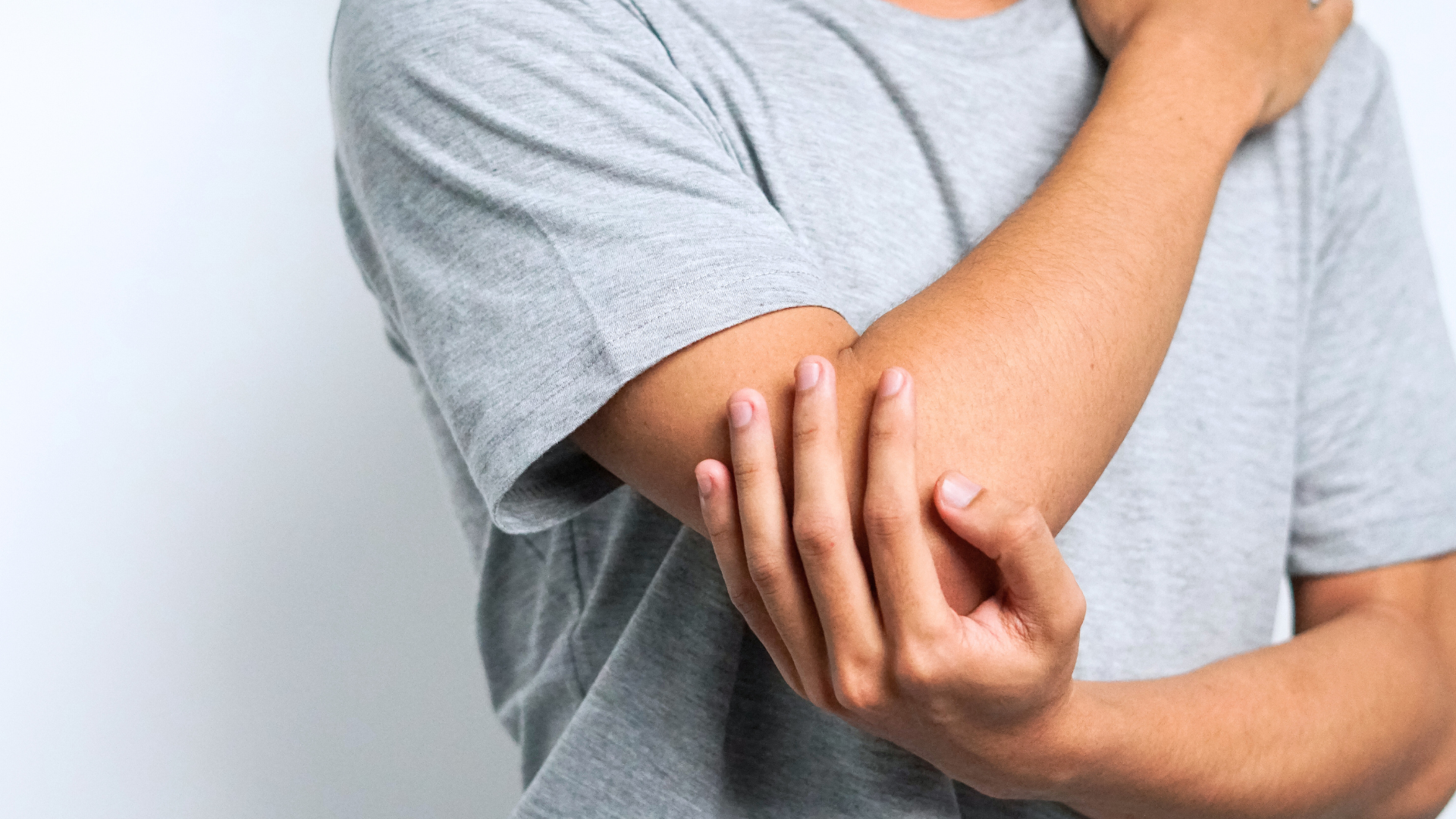
What Is Elbow Pain?
Elbow pain refers to discomfort, irritation, or dysfunction involving the elbow joint and surrounding muscles, tendons, ligaments, and nerves. The elbow plays a critical role in arm movement, gripping, and load transfer, making it vulnerable to repetitive strain and overuse injuries.
Elbow pain may be felt:
- On the outer elbow (commonly associated with tennis elbow)
- On the inner elbow (commonly associated with golfer’s elbow)
- At the back of the elbow
- Radiating into the forearm, wrist, or hand
Elbow pain may develop:
- Acutely, following a fall, sudden strain, or direct impact
- Gradually, due to repetitive activities or overuse
- Chronically, lasting longer than 3 months
It commonly affects office workers, tradespeople, athletes, gym-goers, and individuals performing repetitive gripping or lifting tasks.
Common Elbow Pain Symptoms
Symptoms can vary depending on the cause and severity, and may include:
- Elbow pain or tenderness
- Pain with gripping, lifting, or twisting movements
- Reduced grip strength
- Stiffness or limited elbow movement
- Pain that radiates into the forearm or wrist
- Weakness during repetitive tasks
- Pain worsening with work, sport, or prolonged use
- Localized swelling or irritation
Causes of Elbow Pain
Back pain often results from a combination of physical, lifestyle, and biomechanical factors, including:
- Repetitive gripping or wrist movements
- Overuse from sports or work activities
- Sudden increases in activity or load
- Poor movement mechanics or technique
- Muscle imbalances or weakness
- Direct trauma or falls onto the elbow
- Prolonged desk or computer work
- Nerve irritation around the elbow
Our team focuses on identifying the root cause of your pain so treatment is effective and long-lasting.
Common Elbow Pain Diagnoses
Elbow pain is often related to specific conditions affecting the tendons, joint, or nerves. Common diagnoses include:
Tennis Elbow (Lateral Epicondylitis)
One of the most common causes of elbow pain, affecting the outer elbow. It results from overuse of the forearm extensor muscles and causes pain with gripping, lifting, or wrist extension.
Golfer’s Elbow (Medial Epicondylitis)
A condition affecting the inner elbow, caused by overuse of the forearm flexor muscles. Pain is often felt during gripping, lifting, or wrist flexion.
Elbow Tendonitis / Tendinopathy
Degenerative or irritated tendons around the elbow due to repetitive strain or overload.
Cubital Tunnel Syndrome
Compression or irritation of the ulnar nerve at the elbow, which may cause numbness, tingling, or weakness in the ring and small fingers.
Olecranon Bursitis
Inflammation of the bursa at the back of the elbow, often causing swelling, tenderness, and pain with pressure.
Elbow Sprain or Strain
Injury to the ligaments or muscles surrounding the elbow, often from sudden force or trauma.
Referred Pain from the Neck or Shoulder
Elbow pain may sometimes originate from nerve irritation or dysfunction in the cervical spine or shoulder.
A thorough assessment is essential to determine the exact cause of elbow pain and guide appropriate treatment.
Elbow Pain Treatment
Treatment focuses on reducing pain, restoring strength and function, and addressing contributing factors such as workload, posture, and movement patterns.
Physiotherapy plays a key role in recovery and may include:
- Detailed elbow, wrist, shoulder, and neck assessment
- Manual therapy to reduce pain and improve mobility
- Progressive strengthening and loading programs
- Tendon-specific rehabilitation exercises
- IMS dry needling**
- Education on activity modification and ergonomics
Chiropractic care may help address pain, including:
- Comprehensive joint and biomechanical assessment
- Elbow, wrist, shoulder, and spinal mobilization or manipulation
- Active Release Techniques (ART) and soft tissue therapy
- Improving joint mechanics and movement efficiency
- Corrective exercises for long-term recovery
Massage therapy supports recovery by targeting soft tissue restrictions and muscle tension:
- Reduction of muscle tension and trigger points in the forearm
- Improved circulation and tissue healing
- Joint mobilization and stretching
- Relaxation and recovery support
- Complementary care alongside physiotherapy or chiropractic treatment
When Should You Seek Treatment?
You should consider seeking treatment if you experience:
- Elbow pain lasting longer than 1–2 weeks
- Pain that interferes with work, sport, or daily activities
- Progressive weakness or loss of grip strength
- Numbness or tingling in the forearm or hand
- Pain following a fall, injury, or sudden strain
- Symptoms that worsen or keep returning
Frequently asked questions
What is tennis elbow and can it heal without treatment?
Tennis elbow is an overuse injury of the outer elbow tendons. While mild cases may improve with rest, structured treatment significantly improves recovery and reduces recurrence.
Is golfer’s elbow different from tennis elbow?
Yes. Golfer’s elbow affects the inner elbow, while tennis elbow affects the outer elbow. Both involve tendon overload but require slightly different treatment approaches.
What is tennis elbow and can it heal without treatment?
Tennis elbow is an overuse injury of the outer elbow tendons. While mild cases may improve with rest, structured treatment significantly improves recovery and reduces recurrence.
Should I stop working or exercising with elbow pain?
Not necessarily. We help modify activities and guide safe loading to promote healing rather than complete rest.
Is elbow pain related to neck or shoulder issues?
Yes. Nerve irritation or movement dysfunction in the neck or shoulder can contribute to elbow pain.
How long does it take to recover from elbow pain?
Recovery depends on the diagnosis and severity, but many people notice improvement within a few weeks with appropriate treatment.
Do I need a referral?
No referral is required to receive physiotherapy, chiropractic, or massage therapy services at Pursuit Physiotherapy.